
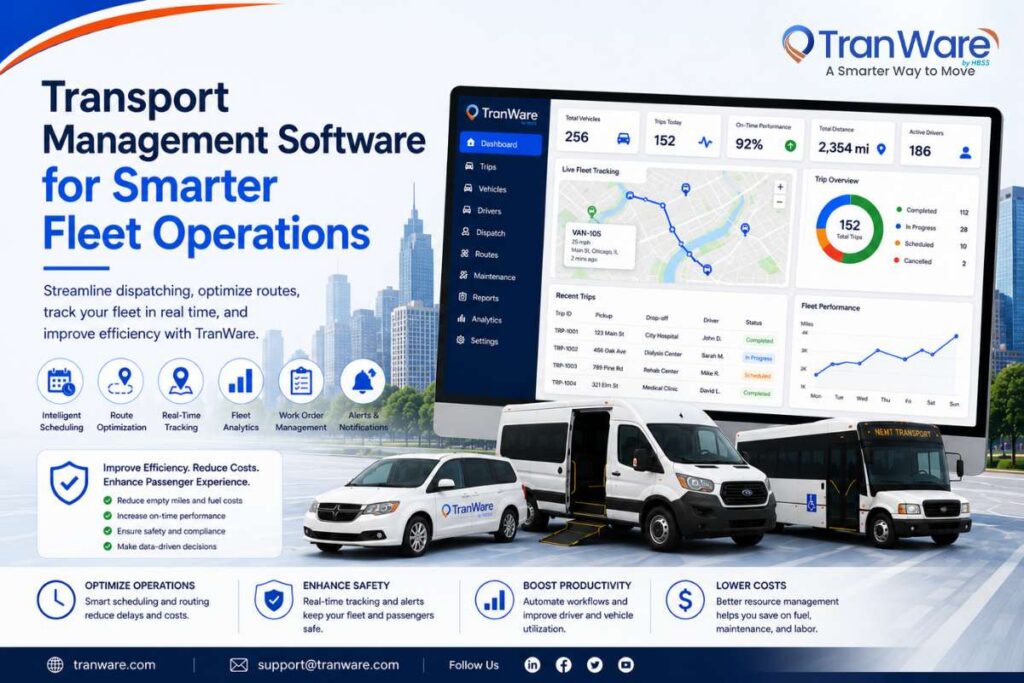
Transportation businesses today face increasing pressure to improve efficiency, reduce operational costs, and deliver reliable services. Whether you’re managing a Non-Emergency Medical Transportation (NEMT) fleet, public transit system, paratransit service, or private shuttle operation, investing in the right Transport management software can transform your daily operations.
This guide explains everything you need to know about transport management software, including its benefits, features, implementation process, and why solutions like TranWare help transportation providers automate dispatching, routing, billing, fleet management, and customer communication.
Quick Answer
Transport management software is a digital platform that helps transportation companies automate scheduling, dispatching, route optimization, fleet maintenance, vehicle tracking, billing, and reporting.
Key Benefits
- Improves operational efficiency
- Reduces fuel and labor costs
- Optimizes routes automatically
- Tracks vehicles in real time
- Automates billing and reporting
- Enhances customer satisfaction
- Supports scalable fleet operations
What Is Transport Management Software?
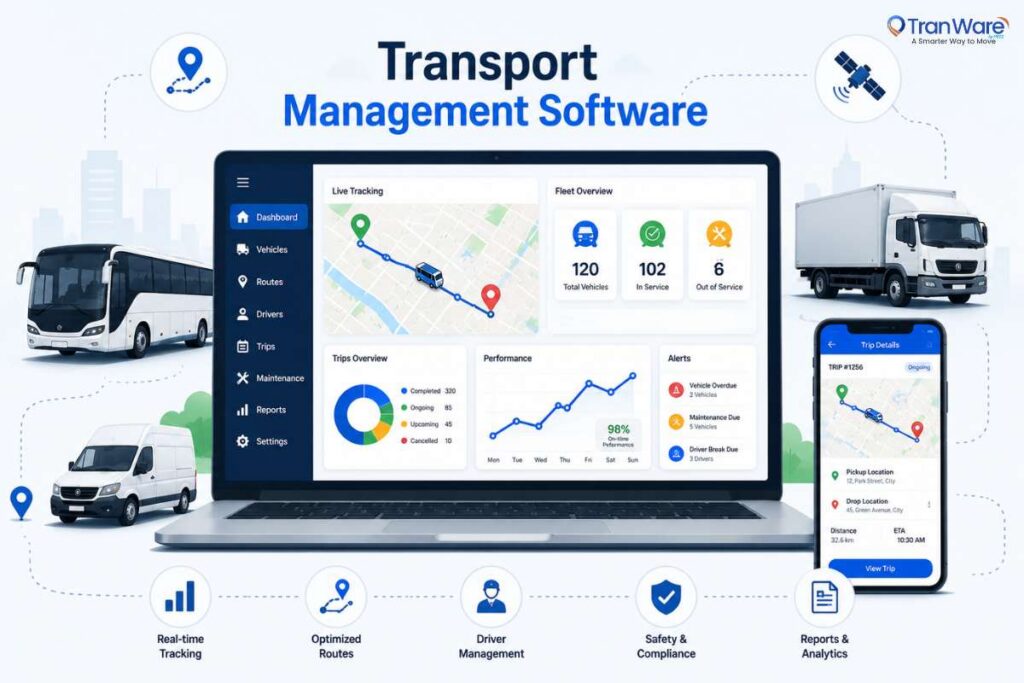
Transport management software is a centralized solution that helps transportation providers plan, monitor, and manage daily operations from one platform. It replaces manual scheduling, paperwork, and disconnected systems with automated workflows that improve efficiency and accuracy.
Modern Transit software combines multiple operational tools into one integrated platform. These include trip scheduling, dispatching, GPS tracking, route optimization, driver management, billing, maintenance tracking, and reporting.
For organizations managing NEMT, paratransit, public transportation, or mixed-use fleets, transport management software simplifies complex workflows while improving service reliability.
Why Transport Management Software Is Important
Transportation providers manage hundreds or even thousands of trips every day. Manual coordination often leads to scheduling conflicts, delayed pickups, inefficient routes, and higher operating costs.
A modern Software for transport management helps businesses:
- Reduce manual work
- Increase dispatcher productivity
- Improve fleet utilization
- Deliver more on-time trips
- Lower fuel consumption
- Improve compliance
- Enhance passenger experience
Key Benefits of Transport Management Software
Better Dispatch Efficiency
Modern NEMT dispatch software automatically assigns vehicles based on driver availability, passenger requirements, vehicle capacity, and location.
Benefits include:
- Faster dispatching
- Fewer scheduling conflicts
- Reduced idle vehicles
- Improved response times
Intelligent Route Optimization
Advanced Route Optimization Software calculates the most efficient routes using GPS data, traffic conditions, appointment times, and vehicle availability.
Advantages include:
- Lower fuel costs
- Reduced mileage
- Improved on-time arrivals
- Increased daily trip capacity
Real-Time Fleet Visibility
Integrated fleet management software provides complete visibility into fleet operations.
Fleet managers can monitor:
- Vehicle locations
- Driver status
- Trip progress
- Delays
- Idle time
- Vehicle performance
Automated Fleet Maintenance
Reliable NEMT fleet maintenance software helps organizations reduce unexpected vehicle breakdowns by scheduling preventive maintenance automatically.
Key maintenance features include:
- Service reminders
- Inspection tracking
- Maintenance history
- Repair scheduling
- Vehicle availability monitoring
Simplified Billing
Integrated billing NEMT software automates invoicing, reimbursement tracking, payment processing, and financial reporting.
Benefits include:
- Faster claims processing
- Reduced billing errors
- Improved cash flow
- Automated invoice generation
Better Customer Communication
Modern Transportation Call Management Software improves communication through:
- Automated trip reminders
- Pickup notifications
- Voice calls
- SMS alerts
- Appointment confirmations
This reduces missed trips while improving customer satisfaction.
Core Features of Modern Transport Management Software
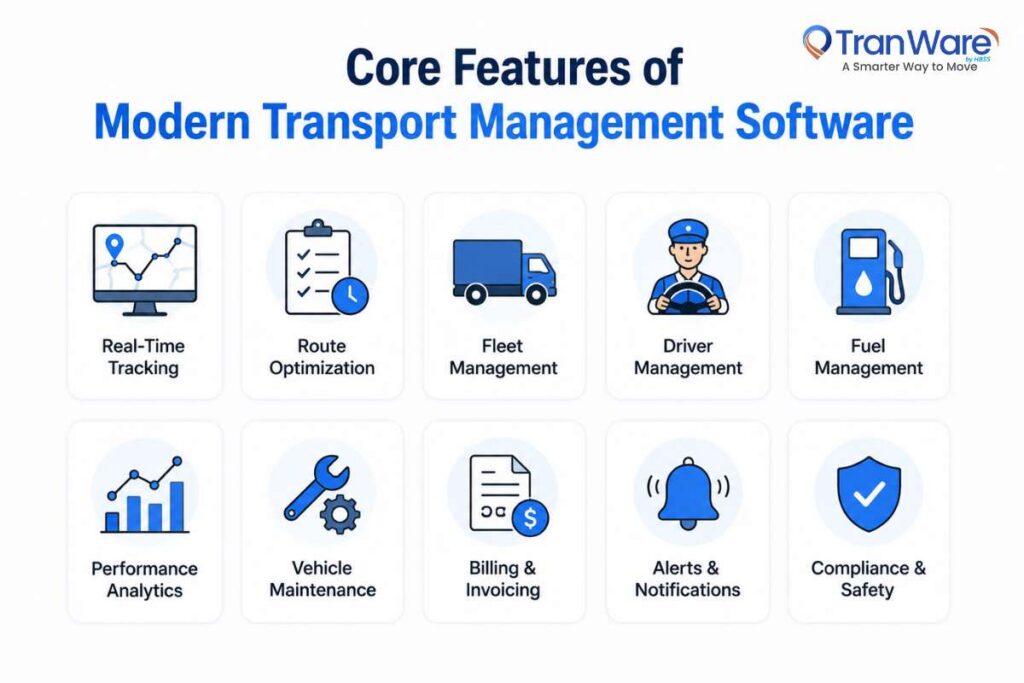
Scheduling and Dispatching
Scheduling tools automatically manage:
- Reservations
- Driver assignments
- Vehicle allocation
- Recurring trips
- Multi-passenger scheduling
Automation significantly reduces dispatcher workload.
Route Optimization
Smart routing considers:
- Traffic conditions
- Passenger locations
- Appointment times
- Driver schedules
- Vehicle capacity
- Road restrictions
Optimized routes reduce operational costs while increasing productivity.
Fleet Management Platform
A modern fleet management platform combines multiple operational functions into one dashboard.
It typically includes:
- GPS tracking
- Driver management
- Maintenance scheduling
- Fuel monitoring
- Trip history
- Reporting
Transportation Incident Management
A quality Transportation Incident Management Software solution helps record and manage:
- Accidents
- Passenger incidents
- Vehicle damage
- Driver reports
- Safety inspections
Incident reporting improves compliance while supporting risk management.
Vehicle Tracking
Real-time GPS tracking allows dispatchers to:
- Locate vehicles instantly
- Monitor route adherence
- Respond to delays
- Improve driver accountability
Reporting & Analytics
Comprehensive reporting helps transportation providers analyze:
- Completed trips
- Revenue
- Fuel usage
- Driver productivity
- Vehicle utilization
- On-time performance
Industries That Benefit
Transport management software serves multiple transportation sectors:
- Non-Emergency Medical Transportation (NEMT)
- Public Transportation
- Paratransit
- Senior Transportation
- School Transportation
- Shuttle Services
- Corporate Transportation
- Mixed Fleet Operations
Transport Management Software Features Comparison
|
Feature |
Basic Software | Modern Transport Management Software |
|
Scheduling |
Manual | Automated |
|
Dispatching |
Manual |
AI-assisted |
|
GPS Tracking |
Limited |
Real-time |
|
Route Optimization |
No |
Yes |
|
Fleet Maintenance |
Manual |
Automated |
|
Billing |
Separate |
Integrated |
|
Incident Reporting |
Limited |
Comprehensive |
|
Mobile App |
No |
Yes |
| Reporting | Basic |
Advanced Analytics |
Estimated Business Impact
The following estimates illustrate the potential operational improvements organizations often seek when implementing modern transportation management platforms.
|
Operational Area |
Before Automation |
After Automation (Estimated) |
|
Dispatcher Productivity |
Standard |
Up to 30–50% improvement |
|
Route Efficiency |
Manual Planning |
10–25% fewer miles driven |
|
Fuel Costs |
Higher |
10–20% reduction |
|
Billing Time |
Several days |
Same day or next day |
|
Vehicle Downtime |
Higher |
Reduced with preventive maintenance |
|
Customer Notifications |
Manual Calls |
Automated SMS & Voice |
Actual results vary depending on fleet size, workflows, and implementation.
How to Choose the Right Transport Management Software
Step 1: Evaluate Your Business Needs
Consider:
- Fleet size
- Daily trip volume
- Passenger type
- Geographic coverage
- Regulatory requirements
Step 2: Identify Essential Features
Look for software offering:
- Scheduling
- Dispatching
- GPS tracking
- Route optimization
- Billing
- Reporting
- Fleet maintenance
- Mobile applications
Step 3: Check Integration Capabilities
The platform should integrate with:
- GPS providers
- Payment systems
- Accounting software
- Healthcare transportation brokers
- Mobile applications
Step 4: Evaluate Scalability
Choose software that grows with your business.
Scalable platforms allow you to:
- Add vehicles
- Add dispatchers
- Expand service areas
- Increase trip volume
without replacing the system.
Step 5: Review Customer Support
Reliable vendors provide:
- Training
- Technical support
- Software updates
- Documentation
- Implementation assistance
Key Factors to Consider Before Buying
- Cloud-based deployment
- Easy-to-use interface
- Mobile accessibility
- Data security
- Reporting capabilities
- Custom workflows
- API integrations
- Automated notifications
- Compliance support
- Vendor experience
Common Mistakes to Avoid
1. Choosing Based Only on Price
Low-cost software may lack critical features needed for long-term growth.
2. Ignoring Integration Requirements
Disconnected systems create duplicate work and increase operational complexity.
3. Overlooking Mobile Functionality
Drivers and dispatchers need mobile access for real-time communication and updates.
4. Neglecting Staff Training
Even powerful software delivers limited value without proper user training.
5. Skipping Maintenance Management
Preventive maintenance reduces breakdowns and extends vehicle life.
Expert Tips for Maximizing ROI
- Automate repetitive dispatch tasks whenever possible.
- Use route optimization daily to reduce fuel and labor costs.
- Schedule preventive maintenance to minimize vehicle downtime.
- Track key performance indicators (KPIs) such as on-time performance, trip completion rates, and vehicle utilization.
- Enable automated passenger notifications to reduce missed appointments.
- Regularly review reports to identify operational improvements.
- Select a scalable platform that supports future fleet expansion.
Why TranWare Is a Strong Choice
TranWare provides an all-in-one transportation management platform designed for NEMT providers, public transit agencies, paratransit operators, microtransit services, and mixed-use fleets.
Its integrated solution includes:
- Transport management software
- Transit software solutions
- NEMT dispatch software
- Route Optimization Software
- Fleet management software
- Fleet management systems
- NEMT fleet maintenance software
- Transportation Incident Management Software
- Billing NEMT software
- Transportation Call Management Software
- Real-time vehicle tracking
- Reporting and analytics
By combining these capabilities into one platform, TranWare helps transportation providers improve operational efficiency, reduce costs, and deliver reliable passenger services.
Conclusion
As transportation operations become more complex, investing in modern Transport management software is no longer optional—it is a strategic necessity. An integrated platform helps organizations automate scheduling, dispatching, route optimization, billing, maintenance, and passenger communication while improving operational efficiency and customer satisfaction.
Whether you manage an NEMT fleet, public transit service, paratransit operation, or mixed-use transportation business, choosing a scalable solution like TranWare can help streamline workflows, reduce operating costs, and support long-term growth. By adopting the right technology today, transportation providers are better equipped to deliver safer, smarter, and more reliable services tomorrow.
Frequently Asked Questions
1. What is transport management software?
Transport management software is a digital platform that automates transportation operations, including scheduling, dispatching, routing, fleet management, billing, and reporting.
2. Who should use transport management software?
It is ideal for NEMT providers, public transit agencies, paratransit operators, shuttle companies, school transportation providers, and mixed-use fleets.
3. How does route optimization improve operations?
It calculates the most efficient routes, reducing fuel costs, travel time, and vehicle mileage while improving on-time performance.
4. What is NEMT dispatch software?
NEMT dispatch software automates trip scheduling, vehicle assignments, driver dispatching, and passenger management for non-emergency medical transportation providers.
5. Why is fleet maintenance software important?
It schedules preventive maintenance, tracks inspections, records service history, and helps reduce unexpected vehicle breakdowns.
6. Can transport management software automate billing?
Yes. Many platforms include integrated billing, invoicing, payment processing, and reimbursement tracking to simplify financial management.
7. What features should I look for in transit software?
Look for scheduling, dispatching, GPS tracking, route optimization, maintenance management, billing, reporting, mobile apps, and automated passenger communication.
8. Is cloud-based software better than on-premise software?
For most organizations, cloud-based software offers easier updates, remote access, lower infrastructure costs, and greater scalability.
Interesting Reads:
Fleet Management Software: Complete Guide for 2026
NEMT Dispatch Software for Smarter Scheduling, Dispatching and Fleet Management