
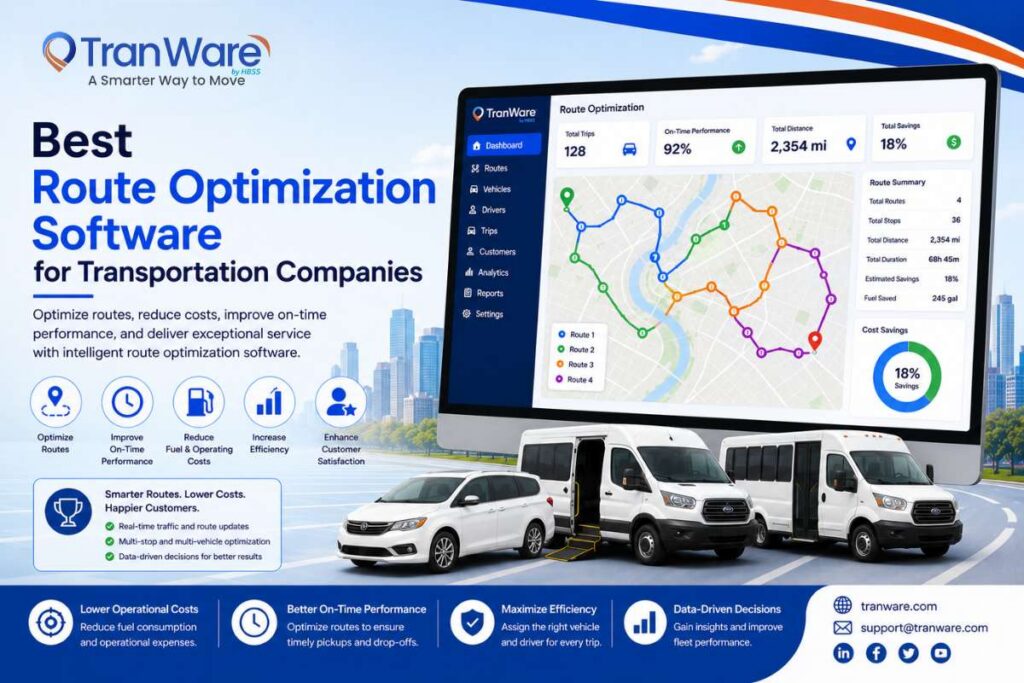
Transportation businesses today face growing challenges, including rising fuel costs, driver shortages, traffic congestion, and increasing customer expectations. Choosing the Best route optimization software for transportation companies helps organizations improve efficiency, reduce operating expenses, and deliver reliable transportation services. Whether you operate Non-Emergency Medical Transportation (NEMT), paratransit, public transit, or mixed-use fleets, the right Route Optimization Software can transform daily operations.
This guide explains how route optimization works, its benefits, key features to look for, and why modern platforms like TranWare provide transportation providers with a complete dispatch, routing, and fleet management solution.
Quick Answer
The best route optimization software for transportation companies automatically creates the most efficient routes by considering schedules, vehicle capacity, traffic conditions, driver availability, and passenger requirements. Modern solutions also integrate dispatching, GPS tracking, billing, fleet management, and reporting to improve operational efficiency while reducing fuel costs and increasing on-time performance.
What Is Route Optimization Software?
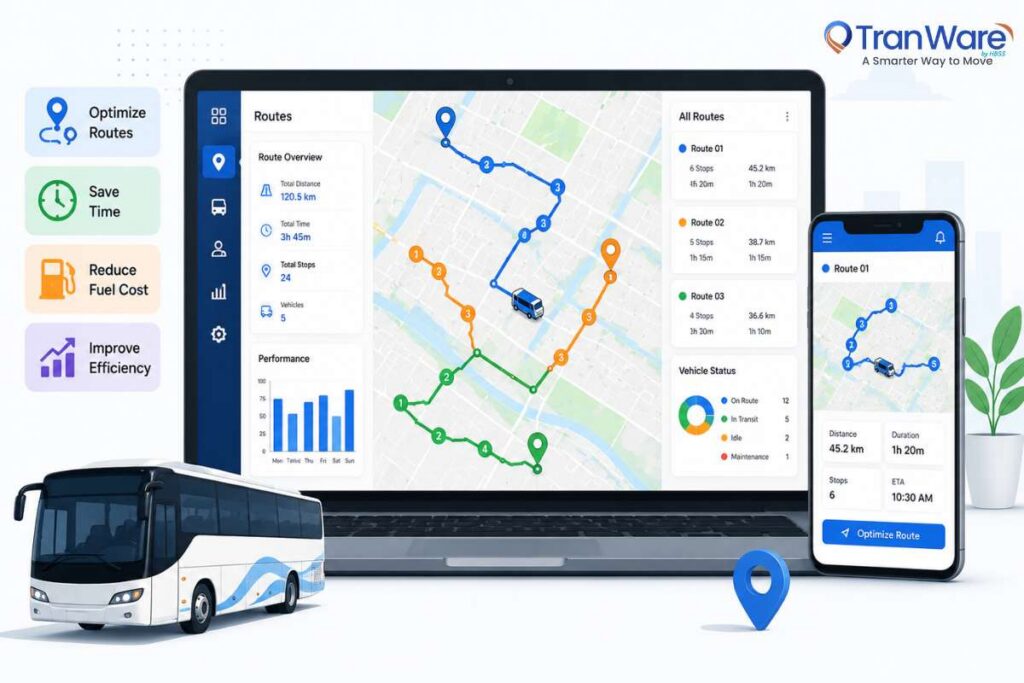
Route Optimization Software is a transportation technology solution that calculates the most efficient travel routes for vehicles while considering multiple operational factors.
Instead of manually assigning trips, dispatchers use intelligent algorithms to determine the best routes based on:
- Pickup and drop-off times
- Vehicle availability
- Driver schedules
- Passenger needs
- Traffic conditions
- Distance
- Vehicle capacity
- Special transportation requirements
For organizations managing hundreds or thousands of trips daily, route optimization becomes essential for reducing costs and improving customer satisfaction.
Why Transportation Companies Need Route Optimization Software
Transportation providers are expected to deliver timely, reliable, and cost-effective services every day. Manual scheduling often leads to unnecessary mileage, scheduling conflicts, and increased operational costs.
Modern transportation fleet route planning software addresses these challenges by automating complex routing decisions while providing dispatchers with real-time visibility into fleet operations.
Industries benefiting from route optimization include:
- Non-Emergency Medical Transportation (NEMT)
- Public Transit Agencies
- Paratransit Services
- Shuttle Operators
- Community Transportation Programs
- Healthcare Transportation Providers
- Mixed Fleet Operations
Key Benefits of the Best Route Optimization Software for Transportation Companies
- Reduces fuel consumption through optimized routing
- Minimizes empty vehicle miles
- Improves driver productivity
- Enhances passenger satisfaction
- Increases on-time arrivals
- Automates scheduling and dispatching
- Improves fleet utilization
- Supports ADA-compliant transportation
- Reduces dispatcher workload
- Provides real-time GPS tracking
- Simplifies reporting and compliance
- Scales with growing transportation businesses
How Route Optimization Software Works
Collects Trip Requests
The software gathers transportation requests from multiple sources, including:
- Online reservations
- Call centers
- Mobile applications
- Broker integrations
- Healthcare facilities
This information includes passenger locations, appointment times, mobility requirements, and special instructions.
Optimizes Routes Automatically
The system evaluates:
- Driver availability
- Vehicle type
- Wheelchair accessibility
- Pickup priorities
- Service windows
- Estimated travel times
- Current traffic conditions
It then creates the most efficient routes with minimal manual intervention.
Dispatches Trips
Integrated NEMT dispatch software sends optimized trip assignments directly to drivers using mobile applications, reducing communication delays.
Tracks Vehicles in Real Time
GPS tracking allows dispatchers to monitor:
- Vehicle locations
- Trip progress
- Delays
- Driver performance
- Passenger pickup status
Generates Reports
Transportation managers receive reports covering:
- Vehicle utilization
- Driver productivity
- Fuel efficiency
- On-time performance
- Trip completion rates
- Operational costs
Essential Features to Look for in Route Optimization Software
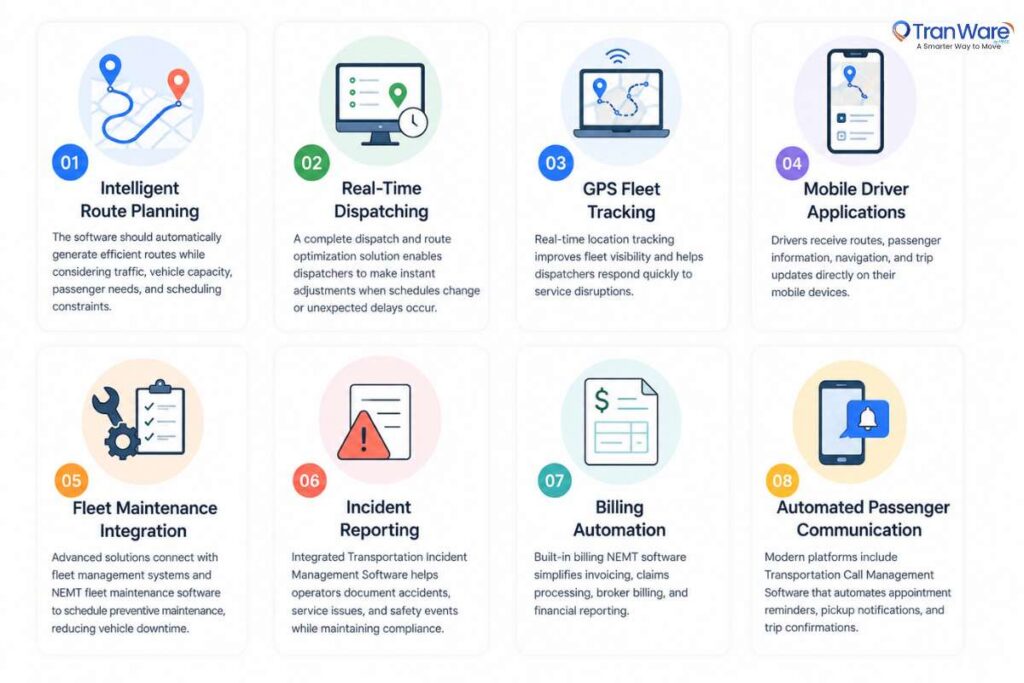
Intelligent Route Planning
The software should automatically generate efficient routes while considering traffic, vehicle capacity, passenger needs, and scheduling constraints.
Real-Time Dispatching
A complete dispatch and route optimization solution enables dispatchers to make instant adjustments when schedules change or unexpected delays occur.
GPS Fleet Tracking
Real-time location tracking improves fleet visibility and helps dispatchers respond quickly to service disruptions.
Mobile Driver Applications
Drivers receive routes, passenger information, navigation, and trip updates directly on their mobile devices.
Fleet Maintenance Integration
Advanced solutions connect with fleet management systems and NEMT fleet maintenance software to schedule preventive maintenance, reducing vehicle downtime.
Incident Reporting
Integrated Transportation Incident Management Software helps operators document accidents, service issues, and safety events while maintaining compliance.
Billing Automation
Built-in billing NEMT software simplifies invoicing, claims processing, broker billing, and financial reporting.
Automated Passenger Communication
Modern platforms include Transportation Call Management Software that automates appointment reminders, pickup notifications, and trip confirmations.
Why Route Optimization Matters for NEMT and Paratransit Services?
Healthcare transportation providers operate under unique constraints.
Patients often require:
- Timely medical appointments
- Wheelchair-accessible vehicles
- Shared rides
- Recurring transportation
- Driver assistance
- Strict appointment windows
Using specialized Route Optimization Software for Paratransit and NEMT Services ensures these complex requirements are met while maximizing fleet efficiency.
Similarly, route optimization software for NEMT providers reduces missed appointments, improves patient satisfaction, and supports broker compliance.
Route Optimization for Public Transit Agencies
Public transit agencies manage fixed routes, demand-response services, and community transportation programs.
The best route optimization software for public transit agencies supports:
- Fixed-route planning
- Demand-responsive transportation
- ADA compliance
- Vehicle scheduling
- Driver assignments
- Multi-passenger optimization
- Service performance reporting
Data Comparison: Manual Dispatch vs Route Optimization Software
|
Feature |
Manual Planning |
Route Optimization Software |
|
Route Planning Time |
30–90 minutes | 2–10 minutes |
|
Fuel Efficiency |
Moderate | High |
|
On-Time Performance |
70–85% | 90–98% |
|
Dispatcher Workload |
High | Low |
|
GPS Tracking |
Limited | Real-Time |
| Route Changes | Manual |
Instant |
| Vehicle Utilization | Average |
Optimized |
| Reporting | Manual |
Automated |
| Billing Integration | Separate |
Integrated |
| Fleet Visibility | Limited |
Complete |
Actual performance varies depending on fleet size, operational processes, and software implementation.
Step-by-Step: Choosing the Best Route Optimization Software
Step 1: Identify Your Transportation Needs
Determine whether you manage:
- NEMT
- Paratransit
- Public Transit
- Shuttle Services
- Mixed Fleets
Step 2: Evaluate Routing Capabilities
Look for software that supports:
- Dynamic routing
- Multi-stop optimization
- Shared rides
- Real-time adjustments
Step 3: Verify Dispatch Integration
Ensure routing works seamlessly with NEMT dispatch software to reduce manual work.
Step 4: Check Fleet Management Features
The platform should integrate with:
- fleet management platform
- Vehicle maintenance
- Driver scheduling
- GPS tracking
Step 5: Review Billing and Reporting
Integrated billing, analytics, and operational reporting eliminate the need for multiple systems.
Step 6: Request a Product Demonstration
Test how the software performs using real operational scenarios before making a purchase decision.
Key Factors to Consider Before Buying
When evaluating solutions, consider:
- Cloud-based deployment
- Ease of use
- Mobile accessibility
- Scalability
- Customer support
- API integrations
- Data security
- Reporting capabilities
- Regulatory compliance
- Customization options
- Total cost of ownership
- Training resources
Comparison of Transportation Routing Solutions
|
Feature |
Basic Routing Software |
Enterprise Transportation Platform |
|
Route Optimization |
Yes |
Yes |
|
Dispatch Management |
Limited |
Advanced |
|
GPS Tracking |
Basic |
Real-Time |
|
Billing |
No |
Yes |
|
Fleet Maintenance |
No |
Yes |
|
Incident Management |
No |
Yes |
|
Passenger Notifications |
Limited | Automated |
|
Analytics |
Basic |
Comprehensive |
|
API Integration |
Limited |
Extensive |
| Scalability | Small Fleets |
Small to Large Fleets |
Common Mistakes When Selecting Route Optimization Software
1. Choosing Price Over Functionality
The lowest-cost solution may lack critical dispatch, billing, or fleet management capabilities, leading to higher long-term costs.
2. Ignoring Integration Needs
Software should integrate with dispatch, GPS, billing, and maintenance systems to avoid manual data entry.
3. Overlooking Scalability
Select a platform that can grow with your organization as trip volumes and fleet sizes increase.
4. Neglecting Driver Experience
Complicated driver apps can slow adoption and reduce operational efficiency.
5. Skipping User Training
Even the best software requires proper onboarding to maximize its benefits.
Expert Tips for Maximizing Route Optimization
- Analyze route performance weekly to identify recurring inefficiencies.
- Use real-time GPS tracking to respond quickly to delays.
- Schedule preventive maintenance to reduce unexpected vehicle downtime.
- Automate passenger reminders to minimize no-shows.
- Integrate routing with billing and dispatch for a unified workflow.
- Review driver performance metrics regularly to improve service quality.
- Choose a solution that supports future growth and evolving transportation needs.
Why TranWare Is a Strong Choice
For organizations seeking the Best route optimization software for transportation companies, TranWare offers an integrated transportation management platform tailored to NEMT, paratransit, public transit, and mixed-use fleet operations.
Key capabilities include:
- Intelligent route optimization
- Transportation scheduling and dispatching
- Real-time vehicle tracking
- Fleet management solutions
- Mobile applications for drivers
- Customer account billing
- Transportation Call Management Software
- Transportation Incident Management Software
- Preventive fleet maintenance
- Reporting and analytics
- API integrations
- Cloud-based deployment
By combining routing, dispatching, billing, and fleet management into a single platform, TranWare helps transportation providers improve operational efficiency while delivering reliable passenger service.

Conclusion
Selecting the Best route optimization software for transportation companies is a strategic investment that can significantly improve efficiency, reduce operational costs, and enhance passenger satisfaction. Advanced Route Optimization Software goes beyond routing by integrating dispatching, GPS tracking, billing, fleet maintenance, incident management, and automated passenger communication into one centralized platform.
For transportation providers in the USA—including NEMT, paratransit, public transit, and mixed-use fleets—an end-to-end solution such as TranWare delivers the automation, scalability, and visibility needed to streamline daily operations and support long-term growth. As one of the best route optimization software for transportation companies, TranWare combines intelligent routing with comprehensive transportation management features to increase on-time performance, maximize fleet utilization, and provide a safer, more reliable transportation experience.
Frequently Asked Questions
1. What is the best route optimization software for transportation companies?
The best solution automates route planning, dispatching, GPS tracking, billing, and fleet management while improving efficiency and reducing operating costs.
2. How does route optimization reduce transportation costs?
It minimizes unnecessary mileage, reduces fuel consumption, improves vehicle utilization, and decreases dispatcher workload.
3. Is route optimization software useful for NEMT providers?
Yes. It helps coordinate medical appointments, optimize shared rides, improve on-time performance, and support regulatory compliance.
4. Can route optimization software integrate with fleet management systems?
Most enterprise platforms integrate with fleet management systems, GPS tracking, maintenance scheduling, and billing software.
5. Does route optimization improve customer satisfaction?
Yes. More accurate arrival times, fewer delays, automated notifications, and efficient scheduling enhance the passenger experience.
6. Is cloud-based transportation software better than on-premises software?
Cloud-based platforms generally offer easier updates, remote access, scalability, and lower infrastructure requirements.
7. What industries benefit from route optimization software?
NEMT providers, paratransit operators, public transit agencies, healthcare transportation services, shuttle companies, and mixed-fleet organizations all benefit.
8. Can route optimization software support real-time dispatching?
Yes. Modern systems automatically update routes and dispatch assignments when schedules or traffic conditions change.
Interesting Reads:
Transport Management Software for Smarter Fleet Operations
NEMT Dispatch Software for Smarter Scheduling, Dispatching and Fleet Management