
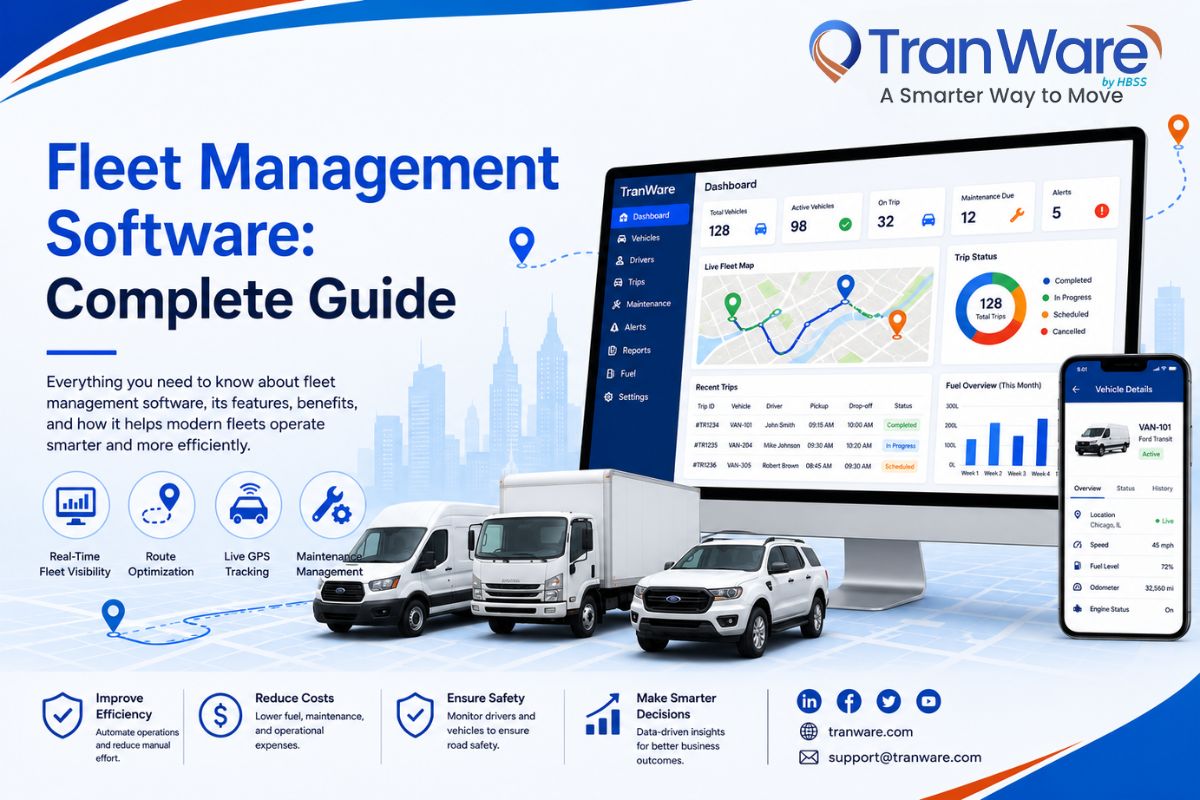
Managing a fleet is more challenging than ever. Rising fuel costs, increasing maintenance expenses, driver shortages, and customer expectations for real-time updates require businesses to adopt smarter technology. Fleet management software helps transportation companies streamline operations, reduce costs, improve vehicle performance, and enhance customer satisfaction. Whether you manage Non-Emergency Medical Transportation (NEMT), public transit, paratransit, or commercial fleets, the right software can transform how your business operates.
This guide explains what fleet management software is, its key benefits, essential features, how it compares to traditional fleet management methods, and why solutions like TranWare help transportation providers improve efficiency through integrated scheduling, dispatching, maintenance, and vehicle tracking.
What Is Fleet Management Software?
Fleet management software is a centralized system designed to help organizations manage every aspect of their vehicle operations. Instead of relying on spreadsheets or manual paperwork, businesses use cloud-based software to automate scheduling, maintenance, dispatching, vehicle tracking, and reporting.
For transportation providers, fleet management software becomes the operational backbone that connects dispatchers, drivers, administrators, and customers through a single platform.
Modern systems also integrate transportation dispatch software, allowing dispatchers to assign trips, monitor vehicles in real time, communicate with drivers, and adjust routes based on changing conditions.
Why Does Fleet Management Software Matters?
Organizations using digital fleet management solutions often experience significant operational improvements.
Key Benefits
- Lower fleet operating costs
- Improved preventive maintenance
- Increased vehicle lifespan
- Better fuel efficiency
- Faster dispatch decisions
- Real-time GPS tracking
- Reduced paperwork
- Higher driver accountability
- Improved customer service
- Better regulatory compliance
These benefits help transportation providers remain competitive while delivering safer and more reliable services.
How Fleet Management Software Works?
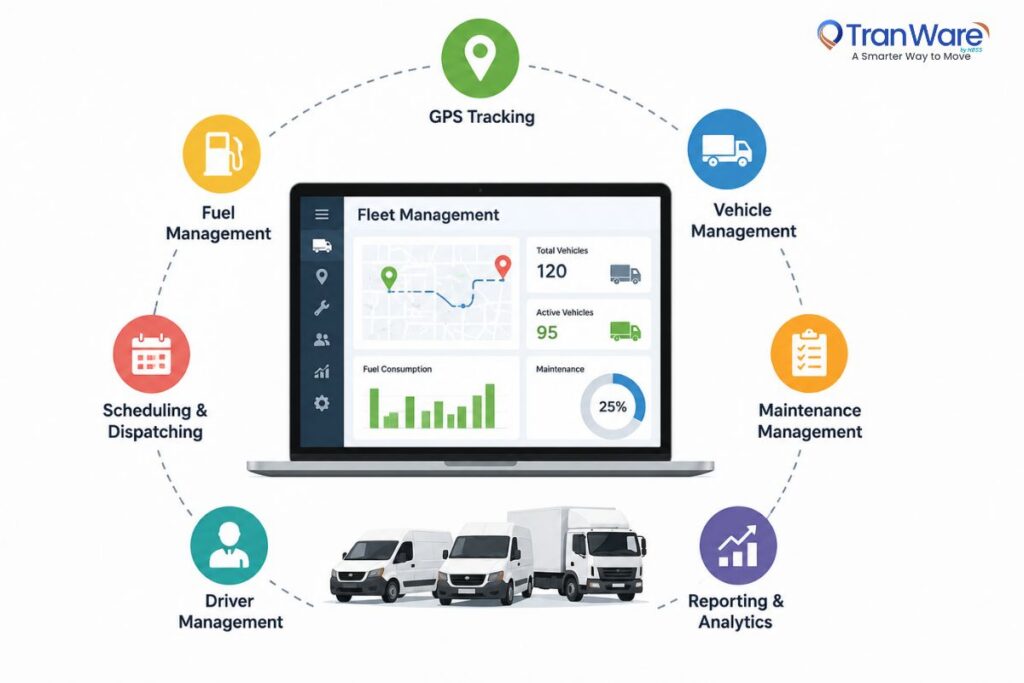
Fleet management software collects data from multiple sources and presents actionable insights through a centralized dashboard.
Vehicle Tracking
Reliable vehicle tracking software provides real-time visibility into fleet operations, enabling dispatchers and managers to:
Managers can:
- View live vehicle locations
- Monitor trip history
- Track mileage
- Review driving behavior
- Receive location alerts
Transportation Dispatch Software
One of the most valuable modules is transportation dispatch software.
Dispatchers can:
- Assign trips automatically
- Match drivers with nearby jobs
- Reduce manual scheduling
- Improve communication
- Track completed trips
This reduces idle time while improving customer service.
Route Optimization
Modern Route Optimization Software uses intelligent routing to reduce travel time and fuel consumption.
Benefits include:
- Shorter travel times
- Reduced fuel usage
- More completed jobs per day
- Better on-time arrivals
- Lower operating costs
Advanced systems also account for traffic conditions, road restrictions, and appointment times.
Fleet Maintenance Management
Preventive maintenance helps avoid expensive repairs.
Fleet software can automatically schedule:
- Oil changes
- Tire rotations
- Brake inspections
- Engine servicing
- Safety inspections
- Vehicle inspections
Automated reminders ensure maintenance is never overlooked.
Driver Management
Managers can monitor:
- Driver performance
- Hours worked
- Speeding incidents
- Idle time
- Harsh braking
- Fuel efficiency
Performance reports help improve safety and accountability.
Reporting and Analytics
Dashboards provide insights into:
- Vehicle utilization
- Fuel expenses
- Maintenance costs
- Driver productivity
- Dispatch performance
- Revenue reporting
These reports support informed business decisions.
Industries That Use Fleet Management Software
Fleet management software serves many industries.
These include:
- Non-Emergency Medical Transportation (NEMT)
- Public transportation
- Paratransit services
- Logistics companies
- Delivery services
- School transportation
- Airport shuttle operators
- Taxi services
- Utility companies
- Government agencies
- Construction businesses
- Field service companies
Fleet Management Software Market Statistics
The fleet management industry continues to grow as organizations invest in automation.
|
Metric |
Estimate |
|
Global Fleet Management Market |
Over $35 billion |
|
Expected Annual Growth |
Approximately 12–15% CAGR |
|
Average Fuel Savings Using GPS Tracking |
10–20% |
|
Reduction in Vehicle Downtime |
Up to 25% |
|
Improvement in Dispatch Efficiency |
20–40% |
|
Increase in Fleet Productivity |
15–30% |
Figures represent industry estimates based on recent market research and fleet technology adoption trends.
Step-by-Step Guide to Choosing Fleet Management Software
Step 1: Identify Business Requirements
Determine:
- Fleet size
- Vehicle types
- Number of drivers
- Dispatch complexity
Step 2: Evaluate Core Features
Choose software that includes:
- GPS tracking
- Transportation dispatch software
- Maintenance management
- Route optimization
- Mobile applications
Step 3: Verify Scalability
Your software should support future business growth without requiring a complete replacement.
Step 4: Check Integration Options
Look for compatibility with:
- Accounting software
- Payroll systems
- Mapping services
- Electronic logging devices (ELDs)
- Payment gateways
Step 5: Compare Pricing
Evaluate:
- Subscription costs
- Implementation fees
- Training
- Support services
- Upgrade costs
Step 6: Request a Demonstration
A product demo helps determine whether the software matches your operational workflow.
Factors to Consider Before Buying
Before making a purchase, evaluate:
- Ease of use
- Cloud accessibility
- Mobile compatibility
- Security
- Customer support
- Customization options
- Reporting capabilities
- Industry experience
- Implementation timeline
- Data migration assistance
Fleet Management Software vs Traditional Fleet Management
| Feature | Fleet Management Software | Manual Fleet Management |
| Dispatching | Automated | Manual |
| Maintenance Tracking | Automatic reminders | Paper records |
| GPS Tracking | Real-time | Limited |
| Reporting | Instant dashboards | Manual spreadsheets |
| Driver Communication | Mobile apps | Phone calls |
| Route Planning | Optimized | Manual |
| Billing | Integrated | Separate systems |
| Operational Visibility | High | Low |
| Scalability | Excellent | Limited |
Common Mistakes to Avoid
1. Choosing Software Based Only on Price
Lower-cost solutions may lack essential features needed for long-term efficiency.
2. Ignoring Driver Training
Even the best software requires proper onboarding to maximize adoption.
3. Skipping Maintenance Automation
Reactive maintenance often results in higher repair costs and vehicle downtime.
4. Not Using Analytics
Businesses that ignore operational reports miss opportunities to reduce costs.
5. Buying Software That Cannot Scale
Choose a platform capable of supporting future fleet expansion.
Expert Tips for Maximizing Fleet Performance
- Monitor fleet KPIs weekly.
- Schedule preventive maintenance instead of reactive repairs.
- Use transportation dispatch software to automate driver assignments.
- Optimize routes daily using real-time traffic information.
- Review driver safety reports regularly.
- Automate customer notifications for improved service.
- Integrate billing and payment systems to reduce administrative work.
- Leverage mobile applications to improve communication with drivers.
- Use historical data to forecast maintenance and operational needs.
- Select software with strong customer support and regular updates.
Why TranWare Supports Modern Fleet Operations
TranWare provides a comprehensive transportation management platform designed for organizations managing NEMT, paratransit, public transit, microtransit, and mixed-use fleets.
Its integrated solution includes:
- Fleet maintenance management
- Transportation dispatch software
- Scheduling and dispatching
- Vehicle tracking
- Route optimization
- Incident reporting
- Customer billing
- Payment processing
- Driver mobile applications
- Reporting and analytics
By centralizing fleet operations, organizations can improve efficiency, reduce operational costs, and deliver more reliable transportation services.
Summary
TranWare Fleet Management Software is a comprehensive transportation management platform that helps organizations streamline fleet operations through real-time GPS tracking, transportation dispatch software, route optimization, preventive maintenance, driver management, billing, and reporting. Designed for NEMT providers, public transit agencies, paratransit operators, and mixed-use fleets, TranWare enables businesses to improve operational efficiency, reduce fuel and maintenance costs, automate dispatching, and deliver reliable transportation services with a scalable, cloud-based solution.
Frequently Asked Questions
1. What is fleet management software?
Fleet management software helps businesses manage vehicles, drivers, maintenance, dispatching, and operational reporting from one platform.
2. How does transportation dispatch software improve operations?
It automates trip assignments, improves driver scheduling, reduces idle time, and enhances communication between dispatchers and drivers.
3. Is fleet management software suitable for small businesses?
Yes. Many solutions are scalable and support fleets ranging from a few vehicles to thousands.
4. Can fleet management software reduce fuel costs?
Yes. GPS tracking, route optimization, and driver behavior monitoring can significantly reduce fuel consumption.
5. Does fleet management software support preventive maintenance?
Yes. Most platforms automatically schedule maintenance based on mileage, time, or engine hours.
6. Is cloud-based fleet management software secure?
Reputable providers use encrypted cloud infrastructure, role-based access, backups, and security monitoring to protect business data.
7. Which industries benefit most from fleet management software?
Transportation, logistics, NEMT, public transit, construction, utilities, delivery services, government agencies, and field service organizations all benefit from fleet management solutions.
8. What features should I prioritize?
Look for GPS tracking, transportation dispatch software, maintenance scheduling, route optimization, reporting, mobile applications, billing, and customer support.
Interesting Reads:
Best NEMT Software in the USA for Dispatch, Billing and Fleet Management