
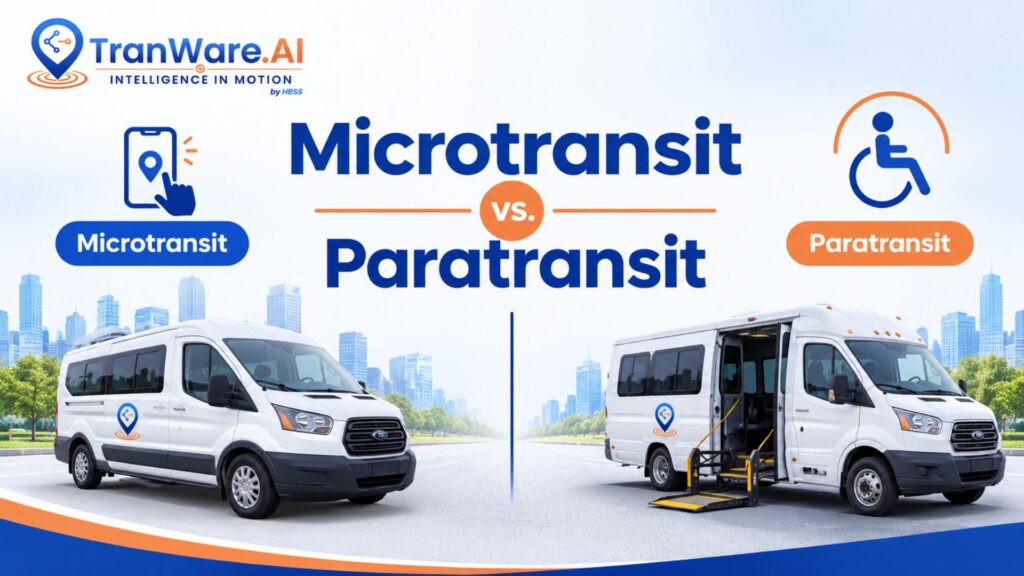
Understanding the difference between microtransit vs. paratransit is important for transportation providers, transit agencies, and fleet operators in the USA. Both services offer flexible transportation, but they serve different passenger needs. Microtransit provides on-demand rides through flexible routes, while paratransit offers accessible transportation for people with disabilities who cannot use regular fixed-route public transit.
As cities look for better ways to move people, both transportation models are becoming important. This article explains their definitions, benefits, key differences, operating challenges, and how transportation management software can help providers manage these services more efficiently.
Quick Answer: What Is the Difference Between Microtransit and Paratransit?
Microtransit is an on-demand public transportation service that uses smaller vehicles and flexible routes to serve passengers in a specific area. Paratransit is an accessible transportation service designed mainly for people with disabilities who cannot independently use fixed-route public transportation. The main difference is their purpose, passenger eligibility, accessibility requirements, and booking process.
- Microtransit: Flexible, shared rides with dynamic routes and convenient booking.
- Paratransit: Specialized, accessible rides for eligible passengers with disabilities.
- Both: Help improve mobility, connect communities, and provide alternatives to traditional public transportation.
What Is Microtransit?
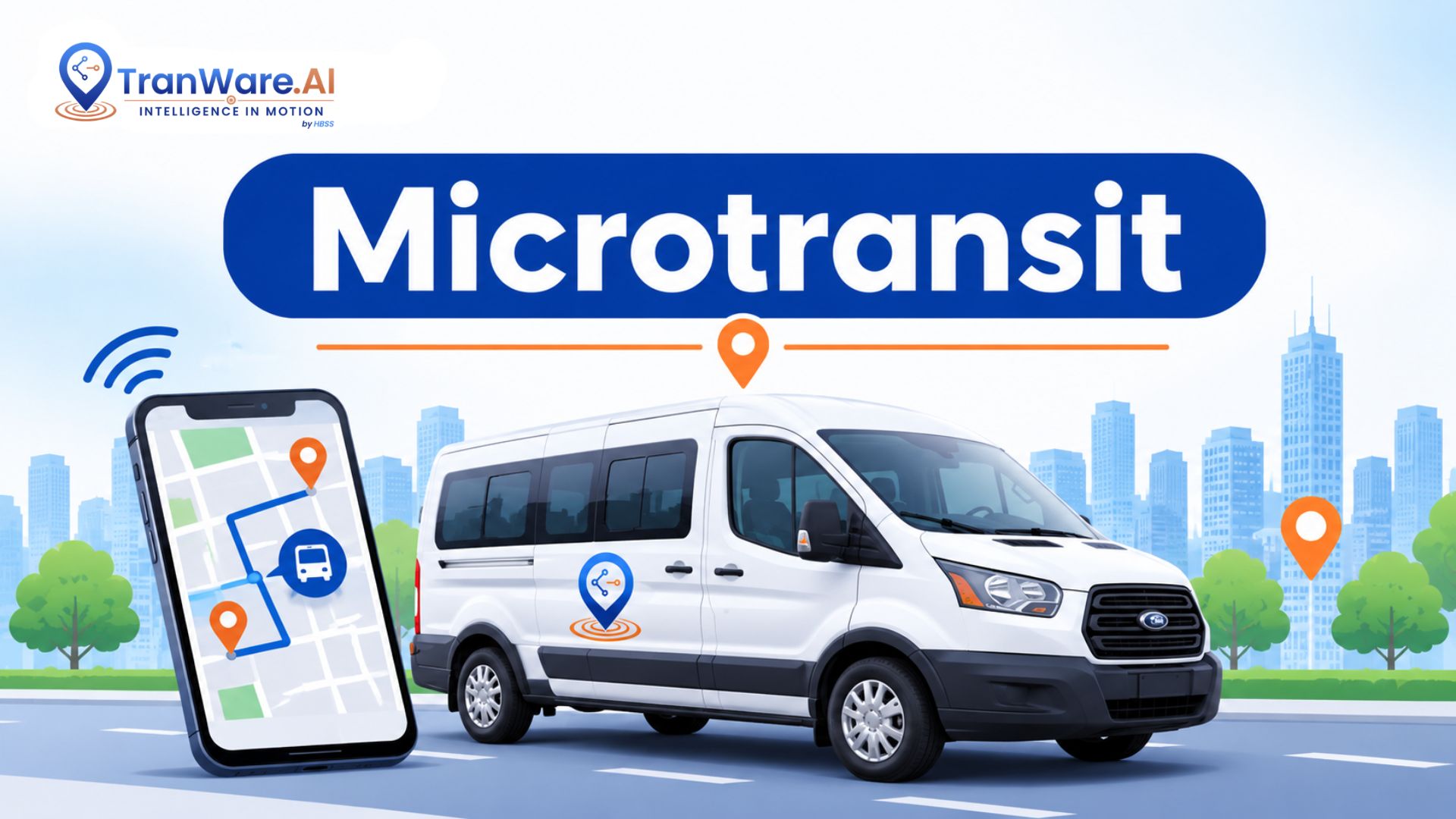
Microtransit is a flexible public transportation service that operates using smaller vehicles, such as vans, minibuses, or shuttle buses. Unlike traditional buses that follow fixed routes and schedules, microtransit adjusts routes based on passenger requests and travel demand.
Passengers can usually book rides through a mobile app, website, or phone. Depending on the service, vehicles may pick up passengers at their requested locations or at nearby virtual stops.
For example, a city may offer microtransit in an area where regular bus routes are limited. Residents can request a shared ride to a shopping center, workplace, hospital, or major transit station.
Key Features of Microtransit
- On-demand booking: Passengers can request rides when they need them.
- Flexible routes: Routes can change based on passenger demand.
- Smaller vehicles: Vans and minibuses are commonly used.
- Shared transportation: Multiple passengers can travel in the same vehicle.
- Digital booking: Mobile apps and online platforms make reservations easier.
- Real-time tracking: Passengers and operators can monitor vehicle locations.
What Is Paratransit?
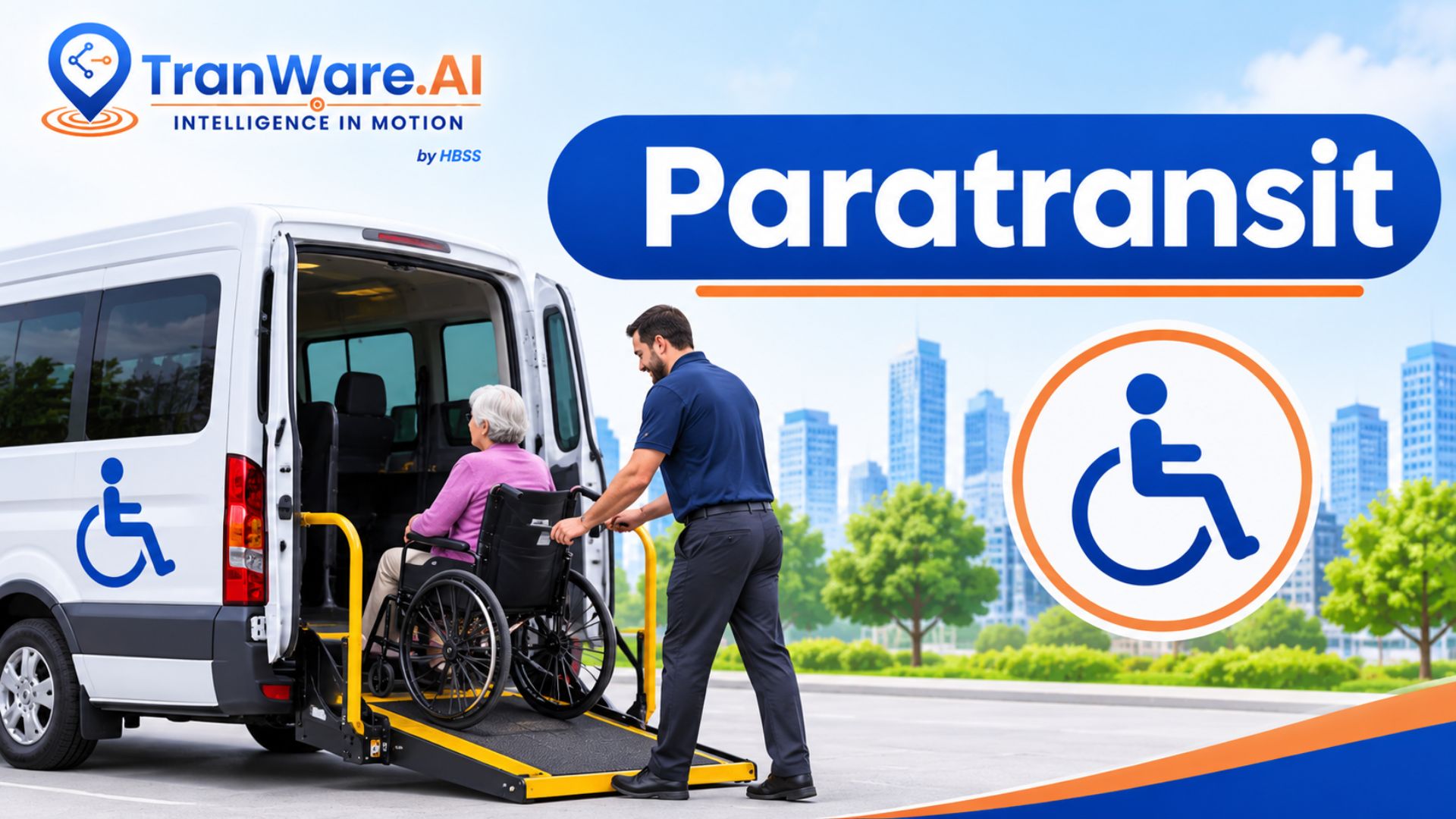
Paratransit is a specialized transportation service designed for people with disabilities who are unable to use regular fixed-route public transportation for some or all of their trips.
In the United States, ADA paratransit refers to complementary services required under the Americans with Disabilities Act (ADA). Public transit agencies must provide eligible individuals with comparable paratransit service within the required service area and operating conditions.
These services often use wheelchair-accessible vans, specially equipped vehicles, and trained drivers. Passengers may book trips in advance and receive curb-to-curb or, where required, door-to-door assistance.
For example, a person who uses a wheelchair and cannot access a regular public bus may schedule a paratransit ride to attend a medical appointment, visit family, or travel to work.
Key Features of Paratransit
- Accessible vehicles: Vehicles may include wheelchair lifts, ramps, and securement systems.
- Eligibility-based service: ADA complementary paratransit is available to people who meet specific eligibility requirements.
- Advance reservations: Passengers commonly schedule trips ahead of time.
- Specialized assistance: Drivers may assist passengers according to service policies and requirements.
- Individual transportation needs: Services support passengers with different mobility requirements.
- Reliable scheduling: Operators coordinate pickups, drop-offs, and passenger appointments.
Microtransit vs. Paratransit: Key Differences
Although both services provide flexible transportation, their operating methods, passenger requirements, and service goals are different.
The following table explains the major differences between microtransit and paratransit services.
| Comparison Factor | Microtransit | Paratransit |
| Main purpose | Flexible public transportation | Accessible transportation for eligible passengers |
| Target users | General public | People with qualifying disabilities |
| Booking method | App, website, or phone | Phone, website, or booking system |
| Routes | Flexible and demand-based | Usually scheduled around passenger requests |
| Vehicle type | Vans, minibuses, and shuttles | Wheelchair-accessible vans and specialized vehicles |
| Accessibility | Depends on the service and vehicle | Designed to meet passenger accessibility needs |
| Scheduling | Real-time or advance booking | Usually advance reservations |
| Passenger eligibility | Generally open to the public | May require eligibility assessment for ADA complementary service |
| Trip sharing | Commonly shared rides | Shared rides are common |
| Regulations | Depends on the transit program | ADA requirements apply to complementary paratransit |
| Common use | Daily travel, commuting, and local trips | Medical visits, work, shopping, and essential travel |
1. Passenger Eligibility and Service Requirements
Microtransit is generally available to anyone within its service area. Passengers do not usually need to prove eligibility before requesting a ride.
ADA complementary paratransit, however, serves people who meet the ADA’s eligibility criteria because their disability prevents them from using fixed-route transit under certain conditions.
2. Route Planning and Scheduling
Microtransit uses flexible routing to group passenger requests and reduce unnecessary travel. Routes can change based on demand, vehicle availability, and passenger locations.
Paratransit requires more detailed trip planning. Dispatchers must consider pickup windows, passenger mobility needs, vehicle equipment, appointment times, and driver availability.
3. Vehicle Accessibility
Microtransit vehicles may include standard vans and minibuses. Accessibility features depend on the program and its fleet.
Paratransit vehicles often require wheelchair lifts or ramps, securement systems, and other accessibility equipment. Vehicle assignments must match the needs of each passenger.
4. Booking and Passenger Experience
Microtransit often offers convenient digital booking and real-time ride updates.
Paratransit providers may accept reservations through phone calls, websites, or mobile applications. They must also manage passenger records, eligibility information, special requirements, and scheduled trips.
Microtransit vs. Public Transit: How Are They Different?
Microtransit and traditional public transit both help people travel within a community, but they use different operating models.
Traditional public transportation generally follows fixed routes and published schedules. Passengers travel between established bus stops or transit stations.
Microtransit uses flexible routes and demand-based scheduling. Vehicles can adjust their routes to collect multiple passengers traveling in similar directions.
For example, a traditional bus may operate every 30 minutes along the same route. A microtransit vehicle may receive several ride requests and create an efficient route based on passenger locations.
| Feature | Microtransit | Traditional Public Transit |
| Route structure | Flexible | Fixed |
| Stops | Virtual or designated stops | Established bus stops |
| Scheduling | Demand-based | Published timetable |
| Vehicle capacity | Usually smaller | Often larger |
| Booking | May require reservations | Usually no reservation |
| Service coverage | Defined zones | Established route networks |
Microtransit can complement traditional public transportation by connecting passengers to major bus stops, train stations, and underserved neighborhoods.
Benefits of Microtransit Services
Microtransit offers several advantages for passengers, communities, and transportation providers.
- Flexible transportation: Passengers can request rides based on their travel needs.
- Better community coverage: Services can connect areas that lack regular bus routes.
- Reduced waiting time: Demand-based scheduling can improve pickup coordination.
- Shared rides: Combining passenger requests can reduce the number of separate vehicle journeys.
- Improved connectivity: Microtransit can connect residential areas with major transit stations.
- Digital convenience: Mobile applications make booking and tracking easier.
- Efficient fleet utilization: Route planning helps operators use available vehicles more effectively.
Benefits of Paratransit Services
Paratransit plays an important role in making transportation accessible to people with disabilities.
- Improved accessibility: Specially equipped vehicles support passengers with mobility needs.
- Greater independence: Passengers can travel to work, medical appointments, and community activities.
- Personalized transportation: Trip planning can account for individual passenger requirements.
- Better travel support: Drivers can provide assistance according to service policies and passenger needs.
- Community inclusion: Accessible transportation helps people participate in everyday activities.
- Reliable trip coordination: Advance scheduling supports planned travel and appointment transportation.
Under the ADA, complementary paratransit is not simply an optional service. It is a required part of public transportation for eligible individuals.
Microtransit vs. Demand Response Transit: Understanding the Difference
Microtransit and demand response transit are closely related because both adjust transportation based on passenger requests.
However, demand response transit is a broader term for transportation that operates according to customer demand rather than a completely fixed route or schedule.
Microtransit is one model of demand-responsive transportation. It commonly uses technology to group ride requests, adjust routes, and coordinate shared trips.
Traditional demand response services may use phone-based reservations, scheduled pickups, and dispatchers who manually assign vehicles.
Both models can benefit from transportation management software that connects booking, scheduling, dispatching, and vehicle tracking.
Common Challenges in Managing Microtransit and Paratransit
Despite their benefits, both transportation models require careful planning and daily coordination.
1. Complex Scheduling
Managing multiple passenger requests, pickup times, and destinations can become difficult as trip volumes increase.
2. Vehicle Availability
Operators must assign the right vehicle based on passenger requirements, vehicle capacity, and driver availability.
3. Route Optimization
Poorly planned routes can increase mileage, fuel consumption, travel time, and operating costs.
4. Driver Coordination
Dispatchers need accurate information about driver assignments, trip changes, delays, and vehicle status.
5. Passenger Communication
Missed calls, late notifications, and unclear pickup information can affect the passenger experience.
6. Incident Management
Accidents, vehicle breakdowns, passenger complaints, and service delays must be recorded and addressed properly.
These challenges make reliable scheduling, dispatching, fleet management, and communication systems important for transportation providers.
How Transportation Management Software Helps
Managing microtransit and paratransit through spreadsheets, phone calls, and disconnected systems can increase manual work. Transportation management software helps bring important activities into one connected platform.
1. Automated Scheduling and Dispatching
Scheduling and dispatching software helps operators organize trip requests, assign drivers, manage vehicles, and monitor trip progress.
2. AI-Powered Route Optimization
Route optimization software helps identify efficient routes based on passenger locations, pickup times, vehicle capacity, and special vehicle requirements.
3. Real-Time GPS Vehicle Tracking
GPS tracking allows dispatchers to monitor vehicle locations and understand trip progress. It also helps teams respond to delays and unexpected changes.
4. Transportation Mobile Applications
A transportation mobile app can support drivers and passengers with trip details, notifications, booking information, and status updates.
5. Fleet Management Software
Fleet management software helps operators manage vehicle records, preventive maintenance, inspections, driver assignments, and repair schedules.
6. Incident Reporting Software
Incident reporting software provides a central place to record accidents, complaints, delays, and other operational events. It helps managers review issues and take corrective action.
7. Billing and Payment Management
Integrated billing and payment tools help transportation providers manage invoices, passenger payments, account records, and financial reconciliation.
How TranWare AI Supports Microtransit and Paratransit Operations
Transportation providers need technology that can support different service models without making daily work more complicated.
TranWare AI provides transportation management software for NEMT, paratransit, public transportation, microtransit, and mixed-use fleets.
Its connected solutions help transportation teams manage several important activities:
- Scheduling and Dispatching: Organize trips, assign vehicles, and manage driver schedules.
- Route Optimization: Support next-day batch and real-time multi-load route planning.
- Fleet Maintenance: Manage maintenance schedules, inspections, and vehicle records.
- Vehicle Tracking: Monitor vehicle locations and status through GPS integration.
- Incident Reporting: Record complaints, accidents, service delays, and operational events.
- Transportation Mobile App: Support drivers and passengers with mobile transportation tools.
- AI Voice Dispatch: Use voice commands to help dispatchers and drivers manage tasks.
- AI Phone Agents: Automate ride inquiries, bookings, reminders, and customer communication.
- Customer Account Billing: Manage invoicing, receivables, and payment-related workflows.
TranWare AI brings together transportation management capabilities backed by more than 25 years of ground transportation industry experience. The company also reports 900+ operating sites and more than 170,000 trips per day across its broader transportation network.
For operators managing both microtransit and paratransit, an integrated platform can help improve visibility, coordinate resources, and reduce disconnected manual processes.
Expert Tips for Managing Microtransit and Paratransit Services
Transportation providers can improve service quality and fleet performance by following these practical tips:
- Understand passenger needs: Identify accessibility requirements, travel patterns, and booking preferences before designing services.
- Use the right vehicles: Match vehicle capacity and accessibility equipment to passenger requirements.
- Automate trip scheduling: Use scheduling tools to reduce manual assignments and scheduling errors.
- Optimize routes regularly: Review routes based on demand, traffic, pickup locations, and vehicle availability.
- Monitor vehicles in real time: Use GPS tracking to improve fleet visibility and respond to service delays.
- Keep passengers informed: Send booking confirmations, pickup reminders, and trip status notifications.
- Track operational performance: Monitor completed trips, on-time pickups, cancellations, vehicle utilization, and operating costs.
- Maintain accurate records: Keep passenger, driver, vehicle, maintenance, and incident information updated.
Conclusion
Microtransit and paratransit both play important roles in improving transportation access across the United States. However, they serve different passenger needs. Microtransit focuses on flexible, on-demand transportation, while paratransit focuses on accessible travel for eligible individuals with disabilities.
For transportation providers, managing these services requires efficient scheduling, reliable dispatching, route optimization, fleet maintenance, and passenger communication.
With the right transportation management software, operators can simplify daily tasks, improve fleet visibility, and deliver more reliable transportation services.
TranWare AI offers integrated transportation management solutions for microtransit, paratransit, NEMT, and public transportation providers.
Frequently Asked Questions (FAQs)
1. What is the main difference between microtransit and paratransit?
Microtransit provides flexible, on-demand transportation for the general public, while paratransit offers accessible transportation for eligible individuals with disabilities.
2. Is microtransit the same as public transportation?
No. Microtransit uses flexible routes and demand-based scheduling, while traditional public transportation generally follows fixed routes and schedules.
3. Is paratransit covered under the ADA?
Yes. The ADA requires public transit agencies operating fixed-route services to provide complementary paratransit for eligible individuals with disabilities.
4. Can microtransit and paratransit use the same transportation software?
Yes. Both services can use transportation management software for scheduling, dispatching, route optimization, GPS tracking, and fleet management, with workflows configured for their specific requirements.
5. How does transportation management software improve microtransit and paratransit operations?
It helps automate trip scheduling, optimize routes, track vehicles, coordinate drivers, manage passenger information, and improve operational reporting.
Interesting Reads:
5 Best Non-Emergency Medical Transportation (NEMT) Scheduling Software in USA 2026
How to Manage Transportation Incidents With Incident Tracking Software