
Choosing the right On-Demand Transit Software Solutions can help US transportation companies improve scheduling, reduce manual work, and provide better passenger service. Whether you manage NEMT trips, paratransit services, microtransit, or a mixed-use fleet, the right platform can make daily operations easier.
This guide compares five on-demand transit software providers in 2026, including TranWare AI, Via Transportation, Spare, RideCo, and Ecolane. We cover their main features, ideal use cases, strengths, and factors to consider before choosing a solution.
Quick Answer: What Are the Best On-Demand Transit Software Solutions in 2026?
Five on-demand transit software solutions worth comparing in the USA are TranWare AI, Via Transportation, Spare, RideCo, and Ecolane. TranWare AI is a strong option for operators seeking integrated dispatch, fleet management, and transportation workflows. Via, Spare, and RideCo focus on flexible transit operations, while Ecolane serves demand-response and paratransit providers.
What Is On-Demand Transit Software?
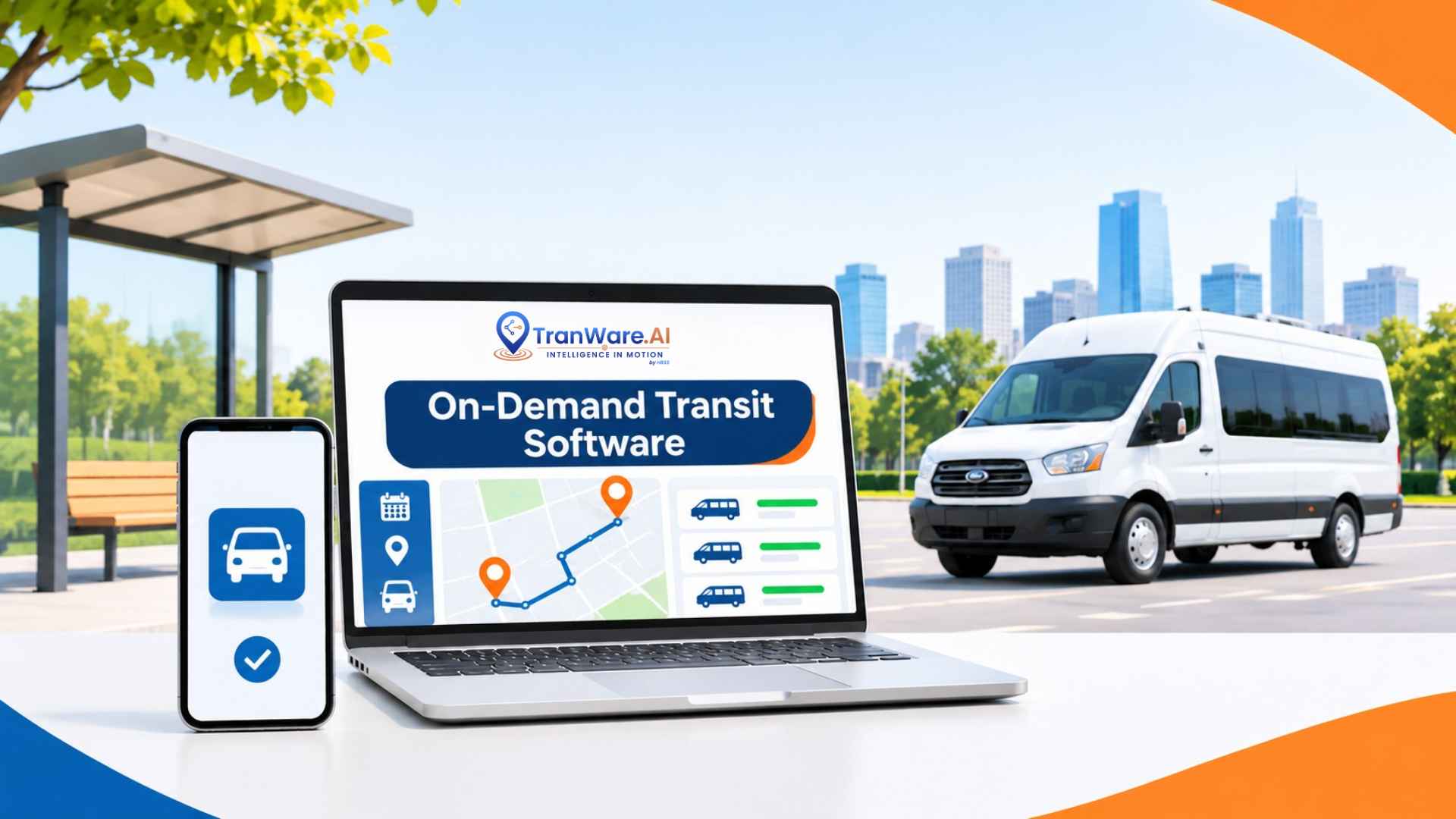
On-Demand Transit Software is a digital system that helps transportation providers manage passenger trips based on actual demand instead of relying only on fixed routes and schedules.
Passengers can request rides through an app, website, or booking agent. The software then helps operators assign vehicles, plan routes, manage drivers, and track trips.
Unlike traditional fixed-route transit, on-demand transportation can adjust service to changing passenger needs. This makes it useful for rural transportation, senior mobility, medical transportation, paratransit, and first-mile/last-mile connections.
Modern On-Demand Transit Management Software often includes passenger booking, automated dispatch, GPS vehicle tracking, route optimization, reporting, and driver communication.
Key Benefits of On-Demand Transit Software Solutions
The right system can improve both operational efficiency and passenger experience.
- Smarter scheduling: Organizes trip requests and reduces manual scheduling work.
- Route optimization: Helps group compatible trips and reduce unnecessary driving.
- Real-time tracking: Gives dispatchers better visibility into vehicle locations and trip progress.
- Improved passenger experience: Supports booking updates, arrival estimates, and communication.
- Fleet management: Helps operators monitor vehicles, maintenance needs, and fleet performance.
- Better reporting: Provides operational data for evaluating service quality and efficiency.
- Scalability: Supports business growth without requiring every process to remain manual.
These benefits depend on the software’s actual features, configuration, and the operator’s service model.
5 Best On-Demand Transit Software Solutions in the USA (2026)
The following five platforms offer different strengths for US transportation businesses. This comparison is based on publicly documented capabilities, service coverage, and intended use cases, rather than independent product testing.
1. TranWare AI — Best for Integrated Transportation and Fleet Management
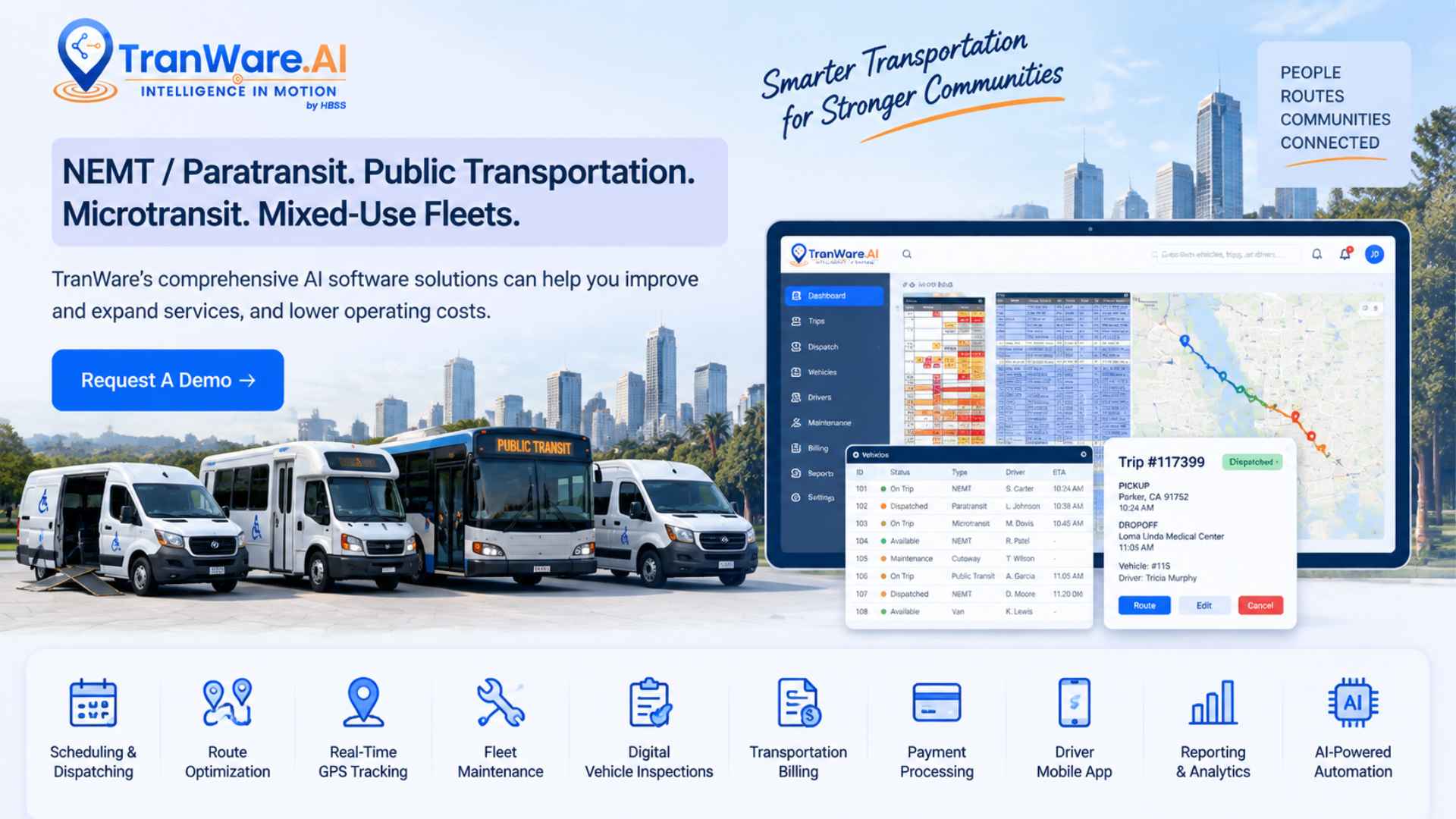
TranWare AI is a comprehensive transportation management platform designed for NEMT, paratransit, taxi, public transportation, microtransit, and mixed-use fleet operations.
For transportation providers managing multiple services, TranWare AI offers a practical advantage: it connects important daily workflows within a broader software ecosystem.
Instead of managing reservations, dispatching, vehicle tracking, maintenance, and billing through unrelated tools, operators can use TranWare’s integrated transportation solutions.
The platform combines traditional Transport Management Software functions with AI-assisted scheduling, route optimization, and fleet operations.
Key Features
- AI-powered scheduling and dispatching: Supports automated trip assignments and real-time dispatch decisions.
- Route optimization: Plans multi-passenger trips while considering pickup times, vehicle requirements, and route changes.
- GPS vehicle tracking: Monitors vehicle locations and operating status.
- Fleet maintenance management: Supports preventive maintenance, vehicle inspections, and inventory tracking.
- NEMT management: Handles specialized transportation needs, including wheelchair-accessible vehicle assignments.
- Mobile applications: Provides driver and rider tools for managing transportation services.
- Billing and payment processing: Connects transportation activity with financial workflows.
- Incident reporting: Records operational incidents, complaints, and related information.
TranWare also documents integrations with transportation brokers, including Modivcare and MTM.
Why Choose TranWare AI?
TranWare AI is particularly suitable for organizations that need more than basic ride-booking software.
For example, an NEMT company may need to schedule medical appointments, assign accessible vehicles, monitor driver progress, track maintenance, and process trip billing.
Using separate systems for these activities can increase administrative work. TranWare’s integrated approach helps operators manage these tasks with better operational visibility.
It is also worth considering for companies seeking NEMT fleet maintenance software alongside scheduling and dispatch capabilities.
Best For: NEMT providers, paratransit companies, transportation businesses, public transit operators, and mixed-use fleets.
Consideration: Operators should confirm implementation requirements, integration compatibility, and the modules included in their selected package.
2. Via Transportation — Best for Public Transit Agencies
Via Transportation provides technology and services for public transportation agencies seeking flexible, demand-responsive mobility.
Its platform supports microtransit and paratransit programs, including services that connect passengers to existing bus and rail networks.
Via also offers Remix, a transit planning platform that helps agencies evaluate service areas, transportation gaps, and the relationship between fixed-route and on-demand services.
Key Features
- Dynamic ride scheduling and routing
- Passenger booking through digital channels
- Shared-ride transportation management
- Transit network planning and analysis
- Fixed-route and on-demand service integration
- Service performance evaluation
One real-world example is Rochester’s RTS On Demand service, which adopted Via technology to improve its passenger booking and transit operations.
3. Spare — Best for Microtransit and Flexible Mobility
Spare provides a transit operations platform for agencies managing microtransit, paratransit, and other public transportation services.
Its software supports passenger booking, scheduling, dispatching, and operational reporting.
Spare is especially useful for organizations that want to combine multiple transportation programs and make better use of shared vehicles.
Key Features
- Automated trip scheduling and dispatching
- Dynamic route optimization
- Rider booking and communication tools
- Driver applications
- Real-time operations monitoring
- Microtransit and paratransit coordination
- Fleet asset management capabilities
4. RideCo — Best for Large-Scale On-Demand Transit
RideCo specializes in on-demand transportation technology for public transit agencies, paratransit providers, and microtransit programs.
Its software helps agencies manage flexible transportation networks through passenger applications, automated dispatching, driver communication, and operational analytics.
RideCo is a relevant option for larger transportation systems that need to manage complex trip demand.
Key Features
- Automated trip matching and scheduling
- Passenger booking applications
- Driver communication and tracking
- Real-time dispatch management
- Service performance reporting
- Paratransit and microtransit support
- Flexible fleet coordination
RideCo reports partnerships involving major US transit agencies, including New York City’s MTA and the Regional Transportation Commission of Southern Nevada.
5. Ecolane — Best for Paratransit and Demand-Responsive Transportation
Ecolane provides Demand Responsive Transit Software designed for transportation agencies that need flexible scheduling and reliable passenger coordination.
Its solutions focus on paratransit, NEMT, microtransit, and demand-response transportation.
The platform supports agencies that must manage advance reservations, special passenger needs, changing schedules, and multiple vehicles.
Key Features
- Automated scheduling and dispatching
- Continuous schedule optimization
- Real-time trip updates
- Vehicle and driver resource planning
- Passenger booking and notifications
- Paratransit eligibility-related workflows
- Transportation reporting and monitoring
Ecolane’s Evolution platform is designed for demand-responsive paratransit scheduling, with tools for real-time changes and vehicle assignments.
Comparison of the 5 Best On-Demand Transit Software Solutions
The table below summarizes each provider’s main focus and the transportation businesses most likely to benefit.
| Software | Main Strengths | Ideal For |
| TranWare AI | AI scheduling, dispatching, GPS tracking, fleet maintenance, billing, NEMT workflows | NEMT, paratransit, public transit, mixed-use fleets |
| Via Transportation | On-demand mobility, network planning, shared transit | Public transit agencies, municipalities |
| Spare | Dynamic routing, rider booking, microtransit and paratransit coordination | Microtransit and flexible transit programs |
| RideCo | On-demand trip matching, dispatching, passenger and driver applications | Large transit agencies and paratransit networks |
| Ecolane | Demand-response scheduling, resource management, paratransit operations | Paratransit, NEMT, demand-response providers |
Which software should you choose?
For organizations seeking a broad transportation management platform that combines daily dispatching with fleet maintenance and billing, TranWare AI deserves strong consideration.
Via, Spare, and RideCo are also compelling choices for public transit and microtransit programs. Ecolane is particularly relevant to organizations focused on paratransit and demand-response scheduling.
No single platform is the best choice for every operator.
How to Choose the Best On-Demand Transit Software
Before investing in On-Demand Transportation Software, operators should evaluate their service model, operational needs, and future growth.
1. Identify Your Transportation Requirements
A company managing medical transportation may require different features from a city running an on-demand shuttle service.
NEMT providers should consider appointment scheduling, specialized vehicle requirements, broker integrations, and billing. Public transit agencies may place greater importance on shared rides, service zones, and passenger access.
2. Evaluate Scheduling and Dispatching
Look for software that supports both advance bookings and last-minute changes.
A reliable system should help dispatchers manage cancellations, delayed vehicles, and changing passenger demand without rebuilding every route manually.
3. Check Fleet Maintenance Capabilities
Vehicle maintenance is essential for reliable transportation operations.
Companies comparing TMS Software or searching for the best NEMT software should evaluate whether fleet inspections, maintenance schedules, and repair records can be managed within the same system.
4. Review Integration Options
The right Transport Management Software should work with the tools your organization already uses.
Check compatibility with payment processing, transportation brokers, GPS systems, reporting tools, and passenger applications.
5. Consider Total Operating Costs
Software pricing is only one part of the decision.
Ask about setup fees, training, integrations, support, additional modules, and future expansion. Request a written proposal that explains what is included.
Common Mistakes When Selecting On-Demand Transit Software
Avoid these mistakes when comparing transportation platforms:
- Choosing based only on price: A lower subscription cost may not include essential scheduling, maintenance, or reporting tools.
- Ignoring passenger accessibility: Booking methods and vehicle assignments should support riders with different mobility and communication needs.
- Overlooking integration requirements: Disconnected systems can create duplicate work and inconsistent trip records.
- Skipping real-world testing: A product demonstration may not reveal how the software handles unexpected changes during a busy operating day.
- Ignoring future growth: Choose a platform that can support additional vehicles, service areas, and transportation programs.
Expert Tips for Improving On-Demand Transit Operations
Transportation operators can make better software decisions by testing systems against real operational scenarios.
- Measure cost per completed trip: Divide relevant operating costs by the number of completed passenger trips. Compare results over consistent periods.
- Track on-time performance: Monitor how often vehicles arrive within your defined pickup window.
- Evaluate vehicle utilization: Review passenger trips per vehicle service hour and the amount of non-revenue driving.
- Test scheduling changes: Ask vendors to demonstrate how their software handles a cancellation, late pickup, or wheelchair-accessible vehicle request.
- Run a pilot program: Test the platform with a small fleet or service area before expanding across the organization.
For example, a provider completing 500 trips per day should test whether its selected system can handle that workload alongside real-time changes, reporting, and driver communication.
A practical evaluation should measure actual improvements rather than rely only on advertised features.
Conclusion
Choosing among the 5 Best On-Demand Transit Software Solutions in the USA (2026) requires understanding how each platform supports your transportation business.
Via, Spare, RideCo, and Ecolane offer established solutions for different forms of public transit, microtransit, paratransit, and demand-responsive mobility.
TranWare AI stands out as a strong option for transportation companies seeking an integrated approach to scheduling, dispatching, fleet maintenance, GPS tracking, billing, and operational management. Its broad range of tools makes it especially relevant to NEMT, paratransit, and mixed-use fleet providers.
If your business wants to connect more transportation workflows through one platform, explore TranWare AI Transportation Management Solutions or request a demonstration to evaluate its capabilities against your specific needs.
Frequently Asked Questions
1. What is the best on-demand transit software in 2026?
TranWare AI, Via, Spare, RideCo, and Ecolane are five options worth evaluating. The best choice depends on your transportation services, fleet size, and required features.
2. What is the difference between on-demand transit software and TMS software?
On-demand transit software focuses on passenger requests, scheduling, and dynamic routing. TMS software is a broader term that may also cover fleet operations, billing, maintenance, and transportation administration.
3. Can on-demand transit software support NEMT services?
Yes. Suitable platforms can support medical transportation scheduling, accessible vehicle assignments, dispatching, and trip monitoring.
4. How does demand-responsive transit software improve efficiency?
It helps match passenger demand with available vehicles, adjust routes, automate scheduling, and reduce manual dispatch work.
5. Why consider TranWare AI for transportation management?
TranWare AI combines scheduling, dispatching, route optimization, GPS tracking, fleet maintenance, billing, and other transportation workflows within an integrated software offering.
Interesting Reads:
5 Best Micro Mobility Management Software Solutions for US Operators in 2026
10 Best Public Transport Software Solutions in the USA for 2026