
Choosing the right micro mobility software is essential for US transportation operators looking to manage fleets, improve service efficiency, and simplify daily operations. Whether a business operates shared electric scooters, e-bikes, microtransit vehicles, or mixed transportation fleets, reliable management software can help connect vehicles, drivers, passengers, and operational data.
In this guide, we explore five micro mobility management software solutions for 2026, compare their key features, and explain how to select a platform that matches your transportation business.
Quick Answer: What Are the Best Micro Mobility Software Solutions in 2026?
The five micro mobility software solutions worth considering in 2026 are TranWare, ATOM Mobility, Joyride, Wunder Mobility, and EazyRide. TranWare specializes in passenger transportation and microtransit fleet management, while the other platforms focus on shared scooters, bicycles, e-bikes, and vehicle rentals. The best choice depends on your fleet type and operating requirements.
What Is Micro Mobility Management Software?
Micro mobility management software is a digital platform that helps transportation businesses manage small, shared vehicles such as electric scooters, bicycles, and e-bikes. It connects vehicle monitoring, rider applications, payments, maintenance, and daily fleet operations within a centralized system.
Modern micromobility management platforms may include GPS vehicle tracking software, automated alerts, geofencing, fleet analytics, and mobile applications. These tools help operators monitor vehicle availability, manage service areas, and respond to operational issues.
Micro mobility is also connected to the broader transportation ecosystem. For example, microtransit services use smaller passenger vehicles to provide flexible, on-demand transportation. Although microtransit and micromobility are different service categories, both benefit from connected fleet management technology.
For US transportation companies, selecting suitable software means understanding which tools support their specific service model.
Why Micro Mobility Software Matters for US Operators
Managing a transportation fleet involves more than tracking vehicles. Operators must coordinate service availability, maintain vehicles, support customers, and meet local operating requirements.
The right micro mobility software solutions can help businesses improve these activities through automation and centralized management.
Key Benefits
- Real-Time Fleet Visibility: Monitor vehicle locations, availability, and operational status from one dashboard.
- Improved Fleet Management: Organize maintenance schedules, vehicle assignments, and daily fleet activities.
- Better Customer Experience: Provide mobile applications, ride information, and digital booking options.
- Reduced Manual Work: Automate routine processes such as reporting, scheduling, and customer communication.
- Smarter Operational Decisions: Use fleet data to identify service demand, vehicle utilization, and operational issues.
- Scalable Operations: Support fleet expansion, additional service locations, and new transportation requirements.
- Improved Service Coordination: Connect drivers, dispatchers, riders, and fleet managers through integrated systems.
The actual benefits depend on the platform, vehicle hardware, available integrations, and operating model.
5 Best Micro Mobility Management Software Solutions for US Operators in 2026
The following platforms were selected for their relevance to shared mobility, fleet operations, vehicle connectivity, and transportation management.
Because micromobility and microtransit serve different needs, the list includes both dedicated shared-vehicle platforms and a broader transportation management solution. The ordering reflects the article’s TranWare-focused editorial perspective rather than independent performance testing.
1. TranWare AI — Best for Microtransit and Integrated Transportation Fleet Management
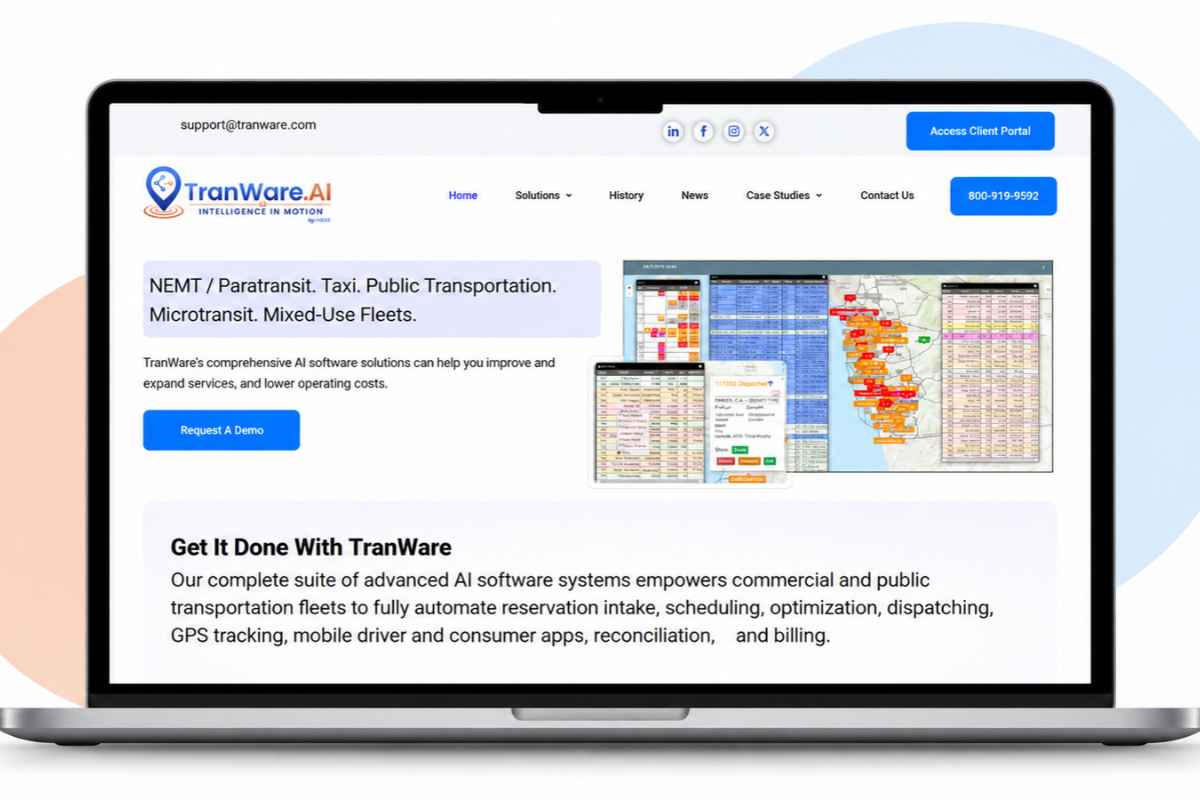
Best For: Microtransit, NEMT, paratransit, public transportation, and mixed-use fleet operators.
TranWare AI is a transportation management software provider that helps businesses manage scheduling, dispatching, vehicle tracking, maintenance, and passenger transportation operations through an integrated platform.
Unlike traditional scooter-sharing software, TranWare focuses on the operational requirements of commercial and public passenger transportation fleets.
Its technology is especially relevant for businesses operating microtransit services, accessible transportation, non-emergency medical transportation, and other demand-responsive mobility services.
TranWare states that its wider HBSS-QRyde organization has more than 25 years of transportation industry experience, with over 900 operating sites handling more than 170,000 trips daily. These are company-reported figures.
Key Features of TranWare
1. Automated Scheduling and Dispatching
TranWare provides scheduling and dispatching tools that help transportation companies coordinate trips, assign vehicles, and monitor daily operations.
Dispatchers can manage trip information and respond to changing service requirements through a connected system.
2. GPS Vehicle Tracking Software
TranWare’s GPS vehicle tracking software allows operators to monitor vehicle locations and statuses in real time.
Its WebDispatcher technology supports vehicle monitoring, route playback, messaging, driver information, and service zone visualization.
3. Route Optimization
Route optimization tools help operators organize pickups, drop-offs, and multi-passenger transportation schedules.
This capability is particularly valuable for microtransit, NEMT, and paratransit providers managing multiple passenger requests.
4. Fleet Maintenance Management
TranWare includes fleet maintenance tools for regular service scheduling, vehicle inspections, inventory management, and maintenance records.
These capabilities help operators organize preventive maintenance and maintain better visibility into vehicle readiness.
5. Transportation Mobile Applications
The platform supports mobile applications for transportation workflows, helping connect drivers, passengers, and operational teams.
6. Billing and Payment Processing
TranWare offers customer account billing, driver cashiering, payment processing, and reconciliation capabilities.
7. AI-Powered Transportation Management
TranWare also offers AI-supported tools, including voice dispatch, automated phone agents, customer management, digital vehicle inspections, and real-time operational dashboards.
Why Choose TranWare?
TranWare is particularly relevant for US operators that need more than basic vehicle rental management.
Its integrated transportation management software solutions bring together scheduling, dispatching, fleet maintenance, vehicle tracking, and billing.
This makes it a suitable option for transportation companies looking to manage multiple operational activities through one connected platform.
Key Consideration: TranWare is designed primarily for passenger transportation and fleet management. Businesses requiring dedicated scooter unlocking, e-bike battery controls, or dockless rental functionality should confirm those capabilities before selecting a platform.
2. ATOM Mobility — Best for Multi-Vehicle Sharing Platforms
Best For: Electric scooter sharing, bike sharing, moped rentals, and multi-vehicle mobility businesses.
ATOM Mobility is a technology platform designed for businesses that want to launch and manage shared vehicle services.
Its software supports several transportation categories, including scooters, bicycles, mopeds, and cars.
The platform combines branded rider applications, fleet monitoring, vehicle connectivity, and business management tools.
Key Features
- White-Label Mobile Applications: Create branded applications for shared mobility services.
- Multi-Vehicle Management: Manage different supported vehicle categories through one platform.
- Real-Time Vehicle Monitoring: Track connected vehicles and receive operational alerts.
- Geofencing: Define service zones and vehicle operating areas.
- Fleet Analytics: Review vehicle usage, ride activity, and operational performance.
- Payment Integration: Support digital payments and rental transactions.
- Operator Tools: Coordinate maintenance, charging, and vehicle rebalancing activities.
ATOM Mobility also provides integrations for connected vehicle hardware and shared mobility data standards.
3. Joyride — Best for Growing Shared Mobility Fleets
Best For: E-bike rental businesses, scooter-sharing startups, and expanding shared mobility networks.
Joyride is a shared mobility software platform that helps operators manage connected vehicles, rider applications, and daily rental operations.
The platform is designed for businesses that need a centralized system for managing vehicle availability, customer interactions, and fleet activity.
Joyride also offers access to a wider hardware ecosystem, which may be useful for operators coordinating software and connected vehicle requirements.
Key Features
- White-label rider applications
- Fleet monitoring and vehicle management
- Digital rental and payment workflows
- Geofencing and operational zone management
- Customer management tools
- Fleet analytics and reporting
- Connected vehicle and hardware integrations
Joyride’s software and hardware ecosystem is relevant to operators managing scooters, e-bikes, and other lightweight shared vehicles.
4. Wunder Mobility — Best for Established Shared Mobility Operations
Best For: Established shared mobility companies, regional operators, and multi-city vehicle-sharing services.
Wunder Mobility provides technology for businesses managing shared vehicle fleets and digital mobility services.
Its software is designed to support connected vehicle operations, customer applications, and centralized fleet management.
The platform is particularly relevant to businesses operating across multiple service areas or managing complex shared mobility networks.
Key Features
- Centralized fleet management
- White-label mobility applications
- Connected vehicle integrations
- Fleet monitoring and operational analytics
- Rental and payment management
- Geofencing and service zone controls
- Multi-city fleet operations
- Reporting and integration capabilities
Wunder Mobility positions its software toward established operators that need tools for larger fleets, different vehicle types, and regulated operating environments.
5. EazyRide — Best for Scooter and E-Bike Rental Management
Best For: Scooter rental services, e-bike sharing companies, and branded micromobility operations.
EazyRide is a white-label mobility software platform focused on shared vehicle rental services.
It provides technology for managing electric scooters, e-bikes, and other supported shared vehicles through connected applications and operator tools.
Its software is relevant to businesses that need digital rental workflows, vehicle monitoring, and service area management.
Key Features
- White-label rider applications
- Scooter and e-bike fleet management
- GPS-enabled vehicle monitoring
- Geofencing and service area controls
- Digital payment integration
- Vehicle rental and access management
- Operational reporting and analytics
Comparison of the 5 Best Micro Mobility Management Software Solutions
The table below provides a quick comparison of the five platforms based on their primary capabilities and target users.
| Software | Main Focus | Key Features | Best For |
| TranWare AI | Passenger transportation and microtransit | GPS tracking, dispatching, route optimization, maintenance, billing, AI tools | NEMT, paratransit, microtransit, mixed-use fleets |
| ATOM Mobility | Multi-vehicle sharing | White-label apps, geofencing, fleet analytics, IoT integrations | Scooter, bike, and vehicle-sharing operators |
| Joyride | Shared mobility management | Rider apps, vehicle monitoring, payments, fleet management | Growing shared mobility businesses |
| Wunder Mobility | Large-scale shared mobility | Multi-city operations, fleet management, integrations | Established and regional mobility operators |
| EazyRide | Shared scooter and e-bike rentals | Vehicle access, geofencing, rider applications | E-scooter and e-bike rental businesses |
How to Choose the Best Micro Mobility Software in the USA
Choosing the right micro mobility management software requires careful evaluation of your business needs, fleet structure, and operational goals.
1. Understand Your Transportation Requirements
Start by identifying the transportation services your company provides.
Shared scooter operators typically need vehicle access management, geofencing, and rider applications.
Microtransit and passenger transportation operators may require automated scheduling, route optimization, dispatching, and driver management.
Selecting software designed for your operating model can help avoid unnecessary complexity.
2. Evaluate Fleet Management Capabilities
Reliable fleet management software should provide visibility into vehicle locations, operational status, maintenance activities, and fleet performance.
Look for a platform that helps your team monitor daily operations and identify vehicles requiring attention.
For transportation companies managing larger fleets, centralized monitoring can improve coordination between dispatchers, drivers, and maintenance teams.
3. Check GPS Vehicle Tracking Features
GPS vehicle tracking software is an important part of modern transportation operations.
It allows businesses to monitor vehicle movement, review route activity, and respond to service disruptions.
Operators should evaluate tracking accuracy, reporting capabilities, supported hardware, and integration with other management tools.
4. Consider Integration and Scalability
Your software should support future business growth.
Check whether the platform can integrate with mobile applications, connected vehicles, payment systems, reporting tools, and other transportation technologies.
Businesses operating multiple transportation services may benefit from configurable TMS software that connects scheduling, dispatching, fleet management, and customer communication.
5. Review Security and Operational Support
Transportation software handles important operational and customer information.
Evaluate access controls, data protection practices, technical support, system reliability, and backup procedures.
US operators should also consider applicable local transportation rules, accessibility requirements, and data-sharing obligations.
Micro Mobility Software vs. Traditional Fleet Management Software
Micro mobility software and fleet management software share several capabilities, but their main purposes differ.
| Feature | Micro Mobility Software | Fleet Management Software |
| Primary purpose | Manage shared lightweight vehicles | Manage transportation fleet operations |
| Common vehicles | E-scooters, bicycles, e-bikes | Vans, shuttles, taxis, buses |
| Vehicle tracking | Yes, where supported | Yes, where supported |
| Rider applications | Common | Available in passenger transportation systems |
| Rental management | Core function | Depends on platform |
| Route optimization | Platform-dependent | Common in transportation systems |
| Maintenance management | Platform-dependent | Common |
| Automated dispatching | Depends on service model | Common in passenger transportation software |
| NEMT operations | Not typically included | Available in specialized systems |
For businesses managing different transportation services, integrated software can simplify fleet coordination.
For example, TranWare’s fleet management and transportation solutions combine scheduling, vehicle tracking, route optimization, and maintenance management in one platform.
However, dedicated micromobility platforms remain more suitable for scooter unlocking, dockless vehicle rentals, and bike-sharing operations.
Future Trends in Micro Mobility Management Software
Micro mobility technology continues to evolve as transportation operators seek more connected and efficient systems.
Several developments are shaping the industry in 2026.
AI-Powered Fleet Management
Artificial intelligence is increasingly being used to support demand forecasting, operational monitoring, and automated transportation workflows.
For passenger transportation operators, AI-supported dispatching and customer communication can help reduce repetitive administrative work.
Real-Time GPS and Connected Vehicles
Connected vehicle technology provides operators with more detailed information about fleet locations, availability, and service activity.
This supports better operational visibility and faster responses to changing transportation needs.
Integrated Mobility Platforms
Transportation businesses are exploring ways to connect shared mobility, public transit, and on-demand transportation services.
Software integrations can support better coordination between different transportation systems, although compatibility varies by provider.
Predictive Maintenance
Fleet operators are increasingly interested in using vehicle data to identify maintenance needs before they disrupt operations.
Maintenance alerts, inspection records, and historical performance data can support more organized vehicle servicing.
Data-Driven Transportation Planning
Operational analytics help transportation businesses understand vehicle utilization, rider demand, and service patterns.
These insights can guide fleet deployment, service improvements, and future expansion decisions.
Conclusion
Choosing the best micro mobility management software in the USA depends on your transportation model, fleet requirements, and long-term operational goals.
ATOM Mobility, Joyride, Wunder Mobility, and EazyRide provide software solutions for businesses managing shared scooters, bicycles, e-bikes, and other connected rental vehicles.
For operators managing microtransit, NEMT, paratransit, public transportation, or mixed-use fleets, TranWare offers an integrated transportation management solution designed to support scheduling, dispatching, route optimization, GPS vehicle tracking, maintenance, and customer management.
The right platform should help your team simplify daily operations, improve fleet visibility, and deliver more reliable transportation services.
Frequently Asked Questions About Micro Mobility Software
1. What is the best micro mobility management software in 2026?
TranWare is relevant for microtransit and passenger fleet management, while ATOM Mobility, Joyride, Wunder Mobility, and EazyRide are options for scooter, bike, and shared vehicle operations.
2. What are the main features of micro mobility software?
Common features include GPS tracking, fleet monitoring, rider applications, geofencing, digital payments, maintenance tools, and operational analytics.
3. Can micro mobility software integrate with GPS vehicle tracking software?
Yes. Many platforms integrate with GPS and connected vehicle technology to provide location monitoring, vehicle status updates, and fleet reporting.
4. What is the difference between micro mobility software and NEMT Software?
Micro mobility software generally manages shared scooters and bikes. NEMT Software manages medical transportation bookings, scheduling, dispatching, passenger trips, and related fleet operations.
5. How do US operators choose the right micro mobility management platform?
Operators should compare vehicle compatibility, fleet management features, GPS tracking, integrations, scalability, data security, and technical support.
Interesting Reads:
5 Best GPS Vehicle Tracking Systems in 2026 for Smarter Fleet Management
10 Best Public Transport Software Solutions in the USA for 2026