
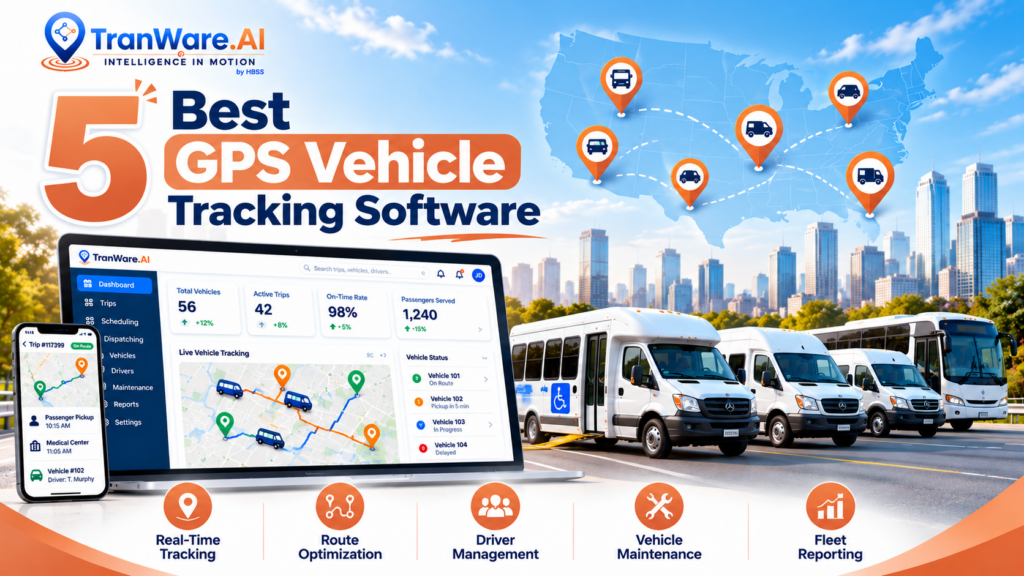
Choosing the right GPS vehicle tracking system in 2026 can help businesses improve fleet visibility, reduce delays, and manage daily transportation operations more efficiently. Modern vehicle tracking software does more than show a vehicle’s location. It can also help monitor driver activity, review routes, plan maintenance, and improve dispatch decisions.
Whether you manage a small transportation business, a large commercial fleet, or a Non-Emergency Medical Transportation (NEMT) service, selecting the right platform matters.
In this guide, we compare five GPS vehicle tracking systems: TranWare AI, Samsara, Verizon Connect, Geotab, and Motive. You’ll learn about their features, use cases, and key differences.
Quick Answer: What Are the 5 Best GPS Vehicle Tracking Systems in 2026?
The five GPS vehicle tracking systems featured in this 2026 comparison are:
- TranWare AI: Best for NEMT, paratransit, and integrated transportation operations.
- Samsara: Best for connected fleet operations and safety management.
- Verizon Connect: Best for general business fleet visibility.
- Geotab: Best for vehicle data, telematics, and fleet analytics.
- Motive: Best for combining GPS tracking, driver safety, and fleet operations.
These are editorial recommendations based on different business needs, not a verified market-wide ranking.
What Is a GPS Vehicle Tracking System?
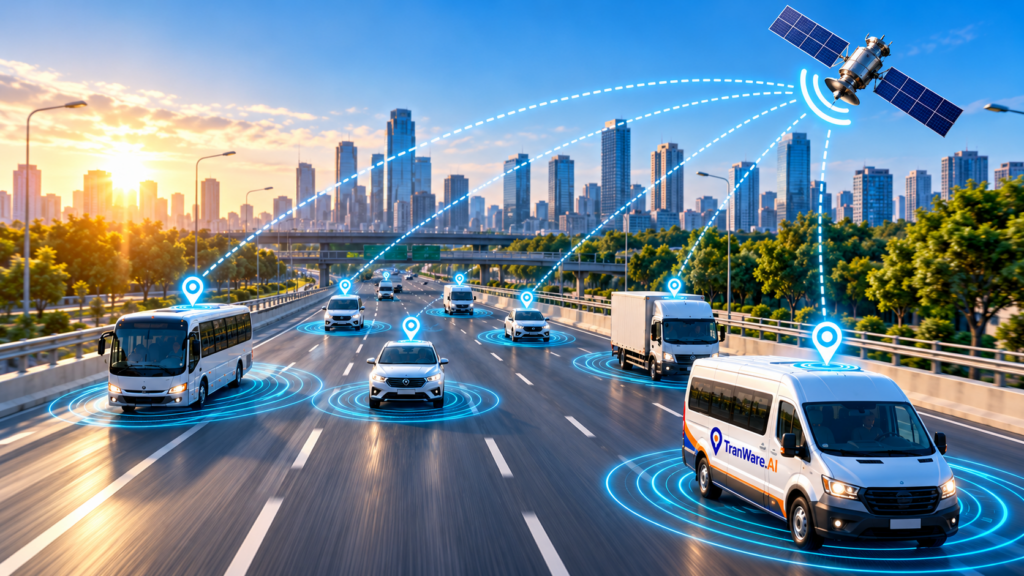
A GPS vehicle tracking system is a technology solution that helps businesses monitor the location and movement of their vehicles. It uses GPS location data, communication networks, and software to display vehicle information on a digital map.
Most commercial systems use GPS tracking devices for fleet vehicles, while some solutions can also use mobile applications or connected vehicle technology.
Fleet managers use this information to monitor routes, check vehicle availability, identify delays, and coordinate drivers.
Modern fleet management vehicle tracking platforms may also connect with dispatch software, vehicle maintenance software, billing tools, and reporting systems. These integrations allow transportation businesses to manage more tasks from one platform.
Why Do Businesses Need GPS Vehicle Tracking Software in 2026?
GPS tracking is useful for much more than finding a vehicle’s current location.
Key benefits include:
- Real-time fleet visibility: Monitor vehicles and identify which drivers are available.
- Better dispatch decisions: Assign trips based on vehicle location and operating needs.
- Improved route planning: Review routes and identify possible delays.
- Lower unnecessary mileage: Reduce avoidable travel through better coordination.
- Vehicle maintenance planning: Use connected tools to manage inspections and service schedules.
- Improved customer communication: Provide more accurate trip updates when supported.
- Operational reporting: Review vehicle movement, trip history, and fleet performance.
For example, an NEMT company operating 30 vehicles may need to track scheduled pickups, driver availability, and passenger trip progress throughout the day. A GPS vehicle tracking system connected to dispatch software can make those tasks easier to coordinate.
The actual savings depend on fleet size, current operations, and how well the software is implemented.
5 Best GPS Vehicle Tracking Systems in 2026: Detailed Comparison
1. TranWare AI – Best for NEMT, Paratransit, and Transportation Fleet Management
TranWare AI is a transportation management software provider offering an integrated GPS vehicle tracking system for businesses that need greater control over fleet operations.
Unlike standalone GPS tracking tools, TranWare’s vehicle tracking solution works with its broader transportation management suite. This makes it particularly relevant for Non-Emergency Medical Transportation (NEMT), paratransit, and other passenger transportation services.
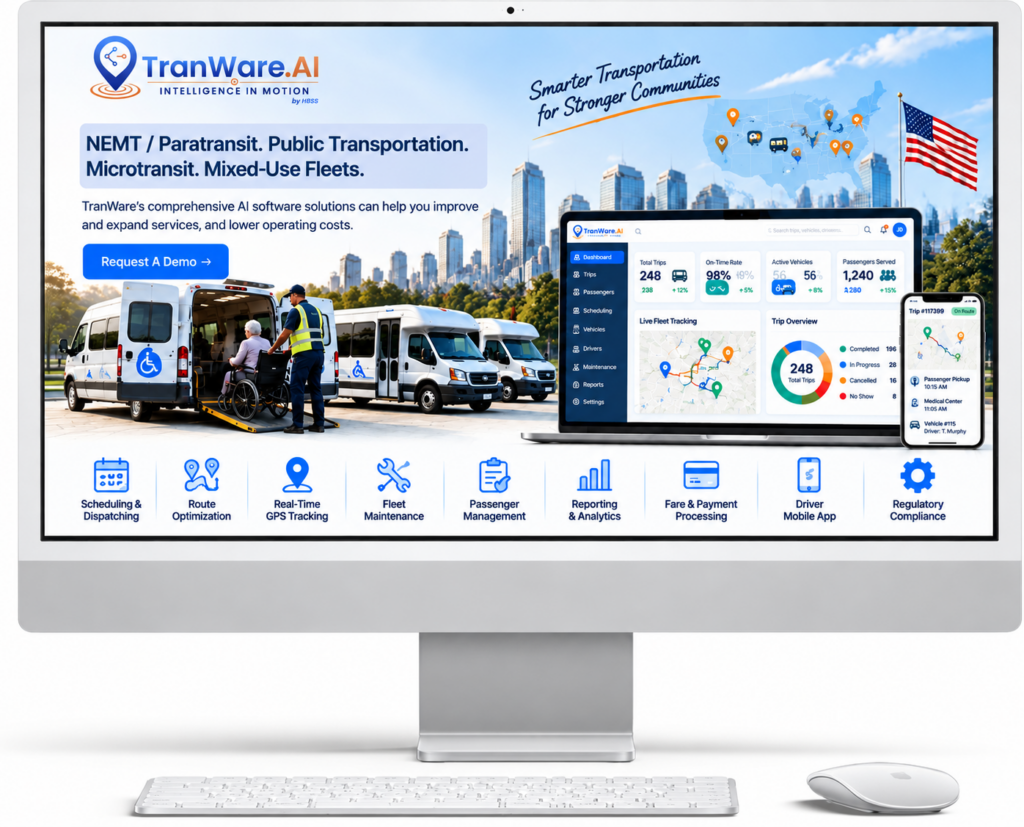
Its WebDispatcher interface allows dispatchers to monitor vehicle locations, review driver information, manage pending trips, and communicate with vehicles through a centralized platform.
Key Features of TranWare AI
- Real-Time Vehicle Tracking: Monitor vehicle locations and operating status on an interactive map.
- WebDispatcher Integration: Connect fleet vehicle tracking with transportation dispatch operations.
- Driver and Vehicle Information: Access vehicle status and driver details directly from the tracking interface.
- Route Playback: Review completed trips and examine individual vehicle movements.
- Job Management: View pending jobs, pickup locations, and passenger waiting times.
- Driver Messaging: Send messages to individual vehicles or multiple vehicles.
- Zone Boundary Visualization: Display transportation service zones to support dispatch decisions.
- Multi-Device Accessibility: Access WebDispatcher from smartphones, tablets, and desktop computers.
These capabilities are documented on TranWare’s vehicle tracking page.
Benefits of Choosing TranWare AI
One of TranWare AI’s main strengths is the connection between vehicle tracking and daily transportation workflows.
For example, imagine an NEMT company managing 40 vehicles across several service areas. When a driver is delayed, dispatchers can check the vehicle’s location, review nearby assignments, and coordinate the next pickup.
Instead of switching between separate tracking and dispatch applications, staff can use information available within the TranWare environment.
Businesses evaluating a wider solution can also explore related TranWare offerings, including NEMT Software, TMS Software, scheduling, dispatching, and transportation operations management.
Pros
- Designed around transportation dispatch workflows.
- Combines vehicle visibility with job management.
- Supports route history and vehicle status monitoring.
- Accessible from multiple web-enabled devices.
- Useful for specialized passenger transportation fleets.
Considerations
- Businesses seeking only a basic GPS tracker should evaluate whether the broader software suite is necessary.
- Pricing, supported GPS hardware, and implementation requirements should be confirmed directly with TranWare.
Best For: NEMT providers, paratransit operators, passenger transportation companies, and businesses seeking a vehicle tracking system for fleet management.
Why TranWare AI Stands Out: Its main advantage is operational integration. For transportation companies, knowing where a vehicle is matters, but connecting that information to trips, drivers, and dispatch decisions can be even more valuable.
2. Samsara – Best for Connected Fleet Operations and Driver Safety
Samsara provides connected operations technology for commercial fleets. Its vehicle tracking software combines GPS location monitoring with tools for driver safety, vehicle diagnostics, and operational reporting.
The platform is useful for businesses that want visibility into both vehicle movement and driving activity.
Key Features
- Real-time GPS fleet tracking
- Vehicle location history
- Geofencing and location alerts
- AI-powered dash camera options
- Vehicle diagnostics and maintenance insights
- Driver safety reporting
- Fleet performance dashboards
Pros
- Strong focus on connected fleet visibility.
- Combines GPS data with driver safety tools.
- Supports large and varied commercial fleets.
Considerations
- Some capabilities require additional hardware or subscriptions.
- Buyers should confirm contract terms and total implementation costs.
Best For: Logistics companies, delivery businesses, construction fleets, and commercial transportation operators.
What Makes It Different: Samsara emphasizes connected vehicle data and safety management alongside GPS tracking.
3. Verizon Connect – Best for General Business Fleet Tracking
Verizon Connect offers GPS fleet tracking software that helps businesses monitor vehicles, review driver activity, and improve fleet visibility.
Its solutions are suitable for organizations that need to manage vehicles operating across multiple locations.
Key Features
- GPS vehicle location monitoring
- Vehicle movement history
- Geofencing alerts
- Driver behavior insights
- Fleet reporting
- Maintenance-related tools
- Mobile fleet management access
Pros
- Suitable for many commercial fleet types.
- Provides centralized fleet visibility.
- Offers tools for reviewing vehicle usage and activity.
Considerations
- Available features depend on the selected product and plan.
- Businesses should confirm hardware, subscription, and installation requirements.
Best For: Service companies, delivery fleets, field operations, and businesses managing vehicles across several locations.
What Makes It Different: Verizon Connect focuses on practical fleet tracking and operational visibility for a broad range of industries.
4. Geotab – Best for Fleet Data and Telematics Analytics
Geotab provides vehicle telematics and fleet management technology. Its MyGeotab platform helps organizations collect and analyze vehicle information to support operational decisions.
The system is especially relevant for fleet managers who want detailed reporting and flexible data integrations.
Key Features
- GPS vehicle tracking
- Vehicle diagnostics
- Trip history and reporting
- Driver activity monitoring
- Maintenance-related data
- Fleet analytics
- Integration and customization options
Pros
- Strong vehicle data and reporting capabilities.
- Flexible integrations.
- Suitable for organizations with complex fleet requirements.
Considerations
- Advanced reporting may require setup and training.
- Pricing and supported features vary by reseller and plan.
Best For: Enterprise fleets, transportation organizations, logistics companies, and data-focused fleet managers.
What Makes It Different: Geotab places particular emphasis on telematics data, analytics, and integrations.
5. Motive – Best for GPS Tracking and Commercial Driver Operations
Motive provides fleet management technology that combines GPS tracking with driver safety, vehicle management, and operational tools.
It is particularly relevant to commercial transportation companies that need to manage drivers, vehicles, and compliance-related workflows.
Key Features
- Real-time GPS vehicle tracking
- Vehicle and trip history
- Driver safety monitoring
- AI-powered dash camera options
- Electronic logging device (ELD) tools
- Vehicle maintenance insights
- Fleet performance reporting
Pros
- Combines tracking with commercial fleet operations.
- Offers driver safety and compliance-related tools.
- Supports fleet managers overseeing multiple vehicles.
Considerations
- Some features depend on hardware and subscription packages.
- Buyers should verify which compliance tools apply to their vehicles.
Best For: Trucking companies, freight operators, logistics businesses, and commercial fleets.
What Makes It Different: Motive connects GPS tracking with driver-focused operational and safety tools.
GPS Vehicle Tracking System Comparison Table: 2026
The table below summarizes the main differences between the five platforms.
| Software | Main Strength | Ideal Users | Pricing |
| TranWare AI | Tracking integrated with dispatch and trip management | NEMT, paratransit, passenger transportation | Request quote |
| Samsara | Connected fleet visibility and driver safety | Logistics and commercial fleets | Request quote |
| Verizon Connect | General fleet monitoring | Service and delivery fleets | Request quote |
| Geotab | Telematics data and fleet analytics | Enterprise and data-focused fleets | Varies by plan/provider |
| Motive | Driver safety and fleet operations | Trucking and commercial fleets | Request quote |
Comparison based on publicly described product capabilities. This is not an independent hands-on performance test. Pricing, hardware, and feature availability should be verified with each provider.
Which GPS Vehicle Tracking System Should You Choose?
The right choice depends on your transportation operations.
For NEMT and paratransit providers, TranWare AI is worth prioritizing because its vehicle tracking tools are connected to dispatch and trip management.
For businesses focused on driver safety, Samsara and Motive offer relevant connected fleet tools.
For general business vehicle tracking, Verizon Connect is another option to evaluate.
For organizations needing advanced telematics analytics, Geotab may be a strong fit.
Rather than choosing based only on the number of features, focus on how each platform supports the daily work of your fleet.
How to Choose the Best GPS Vehicle Tracking System in 2026
Before selecting vehicle tracking software, compare the features that matter most to your business.
1. Identify Your Fleet Requirements
Start by listing your fleet size, vehicle types, and daily transportation needs. A delivery company may prioritize route visibility, while an NEMT provider may need trip scheduling and dispatch integration.
2. Evaluate Real-Time Tracking
Look for a system that provides reliable location updates, vehicle status, and trip history. Ask providers how often GPS information refreshes and what happens when cellular coverage is unavailable.
3. Check Software Integrations
A GPS vehicle tracking system becomes more useful when it connects with existing business tools.
Depending on your operations, useful integrations may include:
- Vehicle maintenance software
- NEMT Software and TMS Software
- NEMT Mobile App
- Incident Tracking Software
- NEMT billing software
- Transportation Payment Processing Software
Not every provider offers these integrations. Confirm availability during the product demonstration.
4. Request a Live Demonstration
Test the software using realistic scenarios. “Check how quickly a dispatcher can locate a vehicle, review trip history, and respond to a delayed pickup.”
Common Mistakes to Avoid When Buying Vehicle Tracking Software
Even a feature-rich system may be a poor fit if it does not support your operations.
- Choosing based only on price: Low subscription costs may not include the tools your business needs.
- Ignoring integration requirements: Separate systems can create extra work when information must be entered more than once.
- Overlooking driver training: Employees need to understand how to use tracking information correctly.
- Failing to review data security: Ask about user permissions, data retention, and access controls.
- Skipping a pilot test: Test the platform with a small group of vehicles before expanding across the fleet.
Expert Tips for Better Fleet Vehicle Tracking
Getting value from GPS tracking requires more than installing devices.
First, connect tracking information to clear business goals. For example, measure late pickups, unnecessary mileage, vehicle idle time, or missed assignments before and after implementation.
Second, use route history to identify repeated operational problems. A vehicle that frequently arrives late may need a better schedule rather than a different driver.
Third, review maintenance and incident data alongside vehicle activity when supported by your software. This helps managers identify patterns that location information alone cannot explain.
Finally, choose tools that can grow with your business. A fleet of 15 vehicles may eventually expand to 50 or more, making scalability and integration important long-term considerations.

Conclusion
The best GPS vehicle tracking system in 2026 is the one that fits your fleet’s daily operations, budget, and future plans.
Samsara, Verizon Connect, Geotab, and Motive offer valuable tools for commercial fleet visibility, driver management, and vehicle data analysis.
For businesses operating NEMT, paratransit, and other passenger transportation services, TranWare AI is particularly worth considering. Its WebDispatcher platform connects real-time vehicle tracking with driver information, route playback, job management, and dispatch communication.
Instead of viewing vehicle tracking as a standalone function, transportation businesses can use connected systems to improve coordination across their operations.
Frequently Asked Questions
1. What is the best GPS vehicle tracking system in 2026?
TranWare AI is a strong option for NEMT and paratransit fleets. Samsara, Verizon Connect, Geotab, and Motive are also worth comparing for different commercial fleet requirements.
2. How can I track a vehicle in transit?
Use an authorized GPS tracking device or compatible mobile application connected to fleet tracking software. The system displays location information on a map when connectivity is available.
3. Can GPS vehicle tracking software reduce fleet operating costs?
Yes, it can help identify unnecessary mileage, idle time, and inefficient dispatching. Actual savings depend on fleet operations and how tracking information is used.
4. Is GPS vehicle tracking useful for NEMT businesses?
Yes. GPS tracking helps NEMT dispatchers monitor vehicles, coordinate pickups, review trip progress, and respond to delays.
5. What is the difference between GPS tracking and fleet management software?
GPS tracking focuses on vehicle location and movement. Fleet management software can also include dispatching, maintenance, driver management, billing, and operational reporting.
Interesting Reads:
Top 5 NEMT KPIs Every Transportation Provider Should Track
10 Best Fleet Maintenance Software in the USA: Features, Benefits, and Pricing