
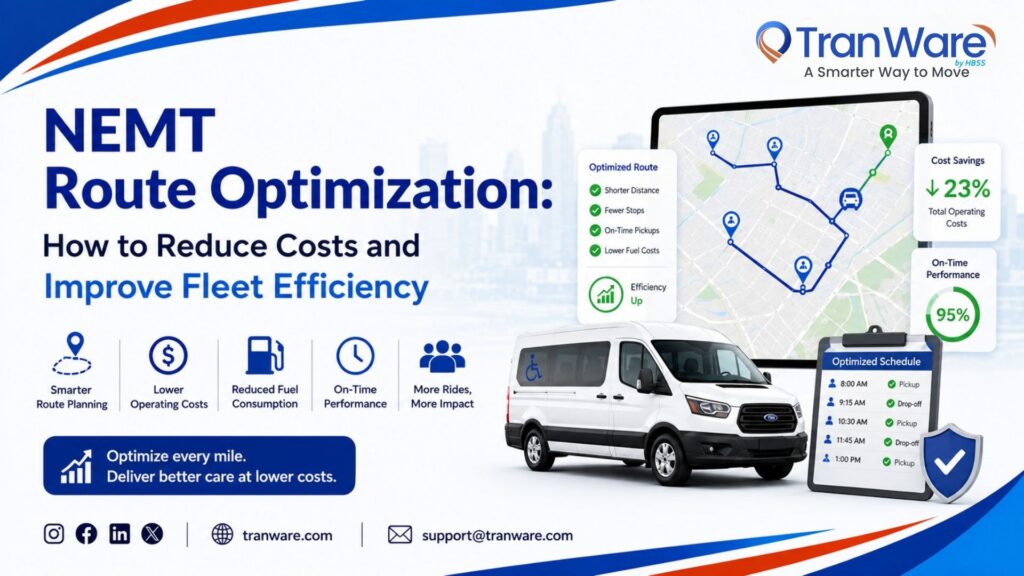
Fuel costs are rising. Trip volumes are increasing. And delays are costing you money.
If you’re a fleet manager in the NEMT industry, inefficient routing can quickly eat into your profits.
The good news? NEMT route optimization can help you reduce costs, improve efficiency, and deliver better service—without increasing your fleet size.
Quick Answer: What is NEMT Route Optimization?
NEMT route optimization is the process of planning the most efficient routes for patient transportation by:
- Reducing travel time and fuel usage
- Avoiding traffic and delays
- Improving driver utilization
- Ensuring on-time pickups and drop-offs
It helps NEMT providers lower costs while increasing operational efficiency.
What is NEMT Route Optimization?
NEMT route optimization uses software to calculate the best routes for:
- Multiple pickups and drop-offs
- Time-sensitive trips
- Driver availability
- Traffic conditions
Instead of manual planning, it uses algorithms to ensure every trip is completed efficiently.
Why Route Optimization is Critical for NEMT Providers
In the USA, NEMT providers deal with:
- High trip volumes
- Strict schedules
- Cost pressure from fuel and labor
Without proper route planning for NEMT, businesses face:
- Longer travel times
- Increased fuel expenses
- Missed or delayed trips
- Underutilized vehicles
Optimized routing directly impacts your bottom line.
How NEMT Route Optimization Improves Fleet Efficiency
1. Reduces Fuel Costs
Efficient routes mean:
- Shorter distances
- Less idle time
- Fewer unnecessary trips
This can reduce fuel costs by up to 20%.
2. Minimizes Travel Time
Optimized routes help drivers:
- Avoid traffic congestion
- Take faster paths
- Meet tight schedules
This improves on-time performance.
3. Improves Vehicle Utilization
With better routing:
- Vehicles complete more trips per day
- Idle time is reduced
- Fleet capacity increases
You do more with fewer resources.
4. Ensures On-Time Pickups
Timely routing ensures:
- Patients are picked up on time
- Drop-offs are accurate
- Service reliability improves
This enhances customer satisfaction.
5. Supports Dynamic Adjustments
Modern transport routing software allows:
- Real-time route changes
- Quick response to cancellations or delays
- Better handling of last-minute trips
Data & Example: Cost Savings with Route Optimization
Here’s how fleet efficiency software impacts operations:
| Metric | Without Optimization | With Optimization |
|---|---|---|
| Fuel Costs | High | Reduced by 15–25% |
| Trips per Vehicle | Limited | Increased |
| On-Time Performance | Inconsistent | Improved |
| Idle Time | High | Reduced |
A fleet manager in the USA reduced fuel expenses by 22% after implementing NEMT route optimization software.
How to Implement Route Optimization in Your NEMT Business
Use Specialized Software
Choose software designed specifically for NEMT operations.
Integrate with Dispatch Systems
Ensure routing works seamlessly with your scheduling and dispatch tools.
Monitor Performance Metrics
Track:
- Fuel usage
- Trip duration
- On-time performance
Train Drivers
Drivers should understand optimized routes and follow them consistently.
Adjust Routes Regularly
Use real-time data to refine routes daily for better efficiency.
Practical Tips for Fleet Managers
- Schedule Trips in Clusters
Group nearby trips together to reduce travel distance and save fuel.
- Use Real-Time Traffic Data
Avoid congestion and delays with live traffic updates.
- Combine Pickups When Possible
Maximize vehicle usage by grouping compatible trips.
- Analyze Routes Weekly
Review performance regularly to identify inefficiencies and improve operations.
- Invest in Cloud-Based Routing Systems
Cloud platforms provide flexibility, scalability, and real-time access.
Common Mistakes to Avoid
- Planning Routes Manually
Manual planning increases inefficiencies and operational costs.
- Ignoring Real-Time Traffic Conditions
Traffic delays can significantly impact schedules and fuel usage.
- Not Using Route Optimization Tools
Without proper software, routing becomes less efficient and scalable.
- Overloading Vehicles Inefficiently
Improper trip planning reduces service quality and increases delays.
- Failing to Track Performance Metrics
Without data tracking, inefficiencies remain hidden.
FAQs About NEMT Route Optimization
1. What is NEMT route optimization?
It is the process of planning efficient routes for patient transportation to reduce costs and improve performance.
2. How does route optimization reduce costs?
It minimizes fuel usage, reduces travel time, and improves vehicle utilization.
3. Is route optimization necessary for small fleets?
Yes, even small fleets benefit from improved efficiency and cost savings.
4. Can it handle multiple trips at once?
Yes, modern systems can optimize routes for multiple pickups and drop-offs.
5. Does it work in real time?
Yes, advanced systems adjust routes based on live data.
6. How quickly can I see results?
Most businesses see improvements within a few weeks.
Conclusion
Efficient routing is no longer optional—it’s essential for NEMT success.
With the right NEMT route optimization strategy, you can reduce costs, improve efficiency, and deliver better service.
By implementing route optimization, you can:
- Lower fuel expenses
- Increase fleet productivity
- Improve on-time performance
- Scale your operations effectively
Start optimizing your routes today to stay competitive in the USA NEMT market.
Ready to Optimize Your NEMT Routes?
Invest in a reliable route optimization solution that helps reduce costs, improve fleet efficiency, and streamline transportation operations.
The right routing system can help your NEMT business operate smarter, faster, and more profitably. Visit at – TranWare
Interesting Reads:
What is NEMT Software? Everything You Need to Know in 2026
How Does NEMT Scheduling and Dispatching Work? (Complete Breakdown)